














- 将高汤和海藻一起浸泡
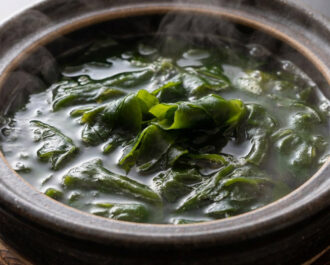
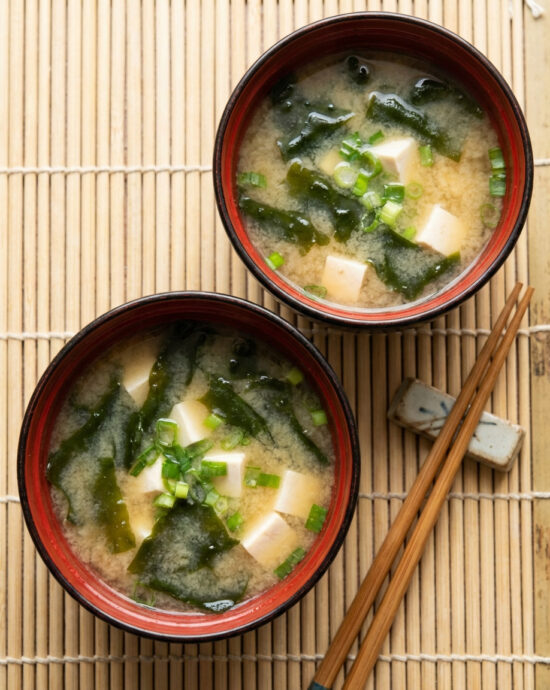
将高汤倒入锅中,用小火慢炖。切勿使其沸腾,否则会影响其鲜美的风味。加入干海带,它会慢慢吸水膨胀,变成柔软的深绿色条状。这一步骤能使高汤融入淡淡的海洋咸鲜味,为后续加入味噌做好准备。.
- 加入味噌酱
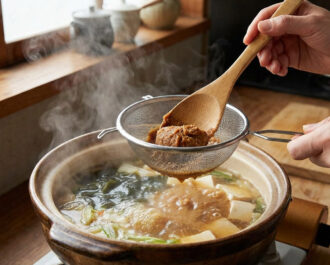
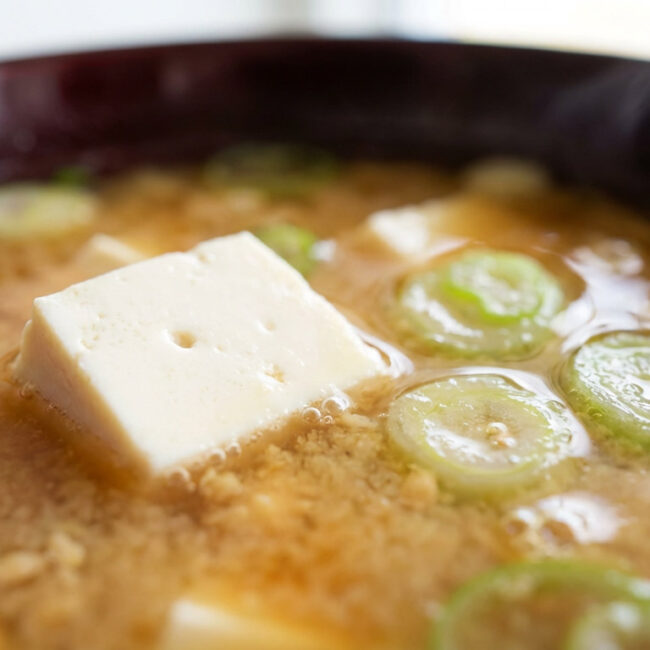
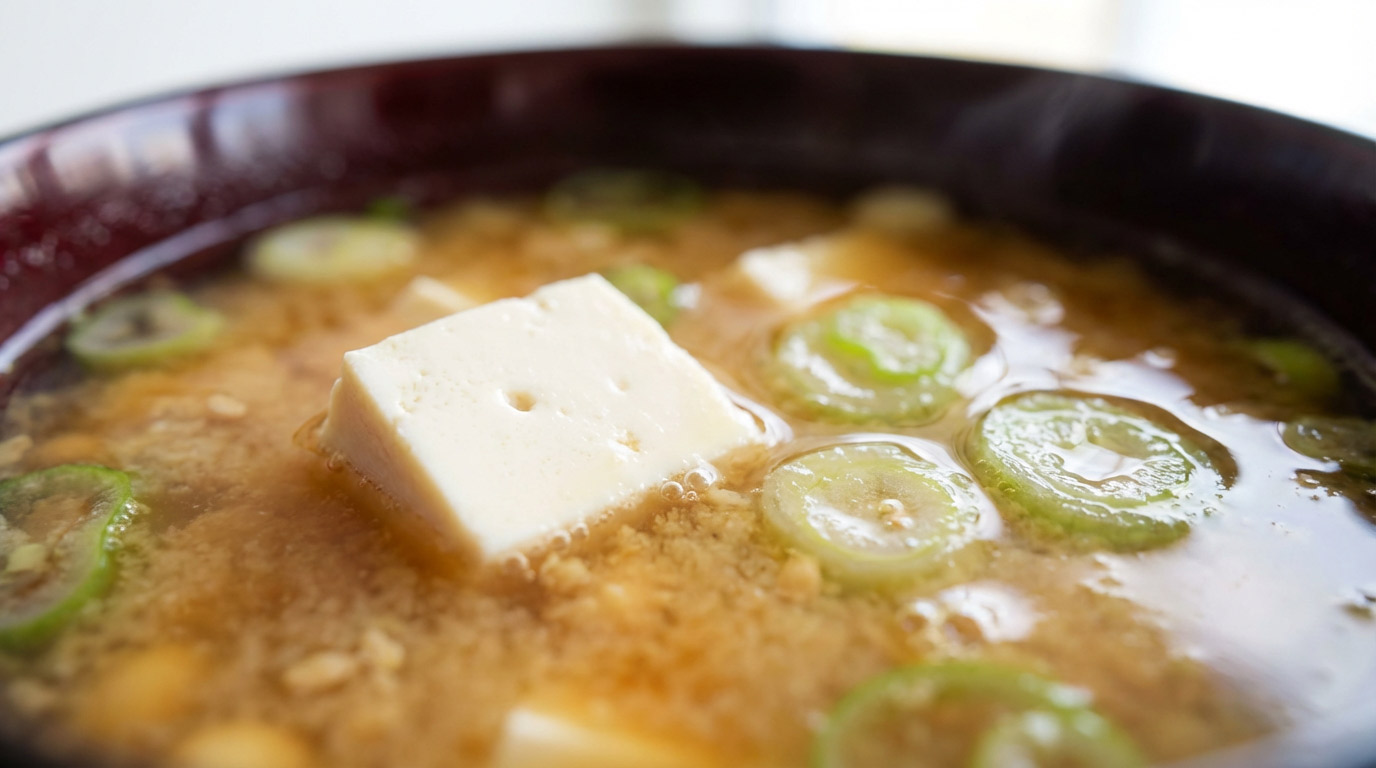
这是最关键的一步:将味噌酱放入小滤网中,浸入热汤中一半深度。用勺子将味噌酱在滤网中轻轻搅拌,直至完全溶解。这样可以防止结块,确保汤汁呈现顺滑浓稠的质地。重要提示:加入味噌后切勿煮沸汤汁,因为高温会破坏有益的益生菌和独特的发酵香气。.
- 加入豆腐并完成
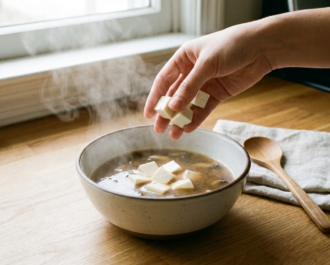
小心地将切成小块的嫩豆腐放入汤中,焖煮约2分钟使其回温。豆腐应保持嫩滑完整。上桌前关火,拌入切好的葱花。汤的热度足以释放葱花的香气,同时又能保持其鲜亮的绿色和爽脆的口感。.
- 卡路里:85 千卡%4%
- 蛋白质:6 g%12%
- 碳水化合物:8 g%3%
- 糖:2 g%2%
- 盐:1.5 g%25%
- 活力:355 千焦%4%
- 胖的:3 g%4%
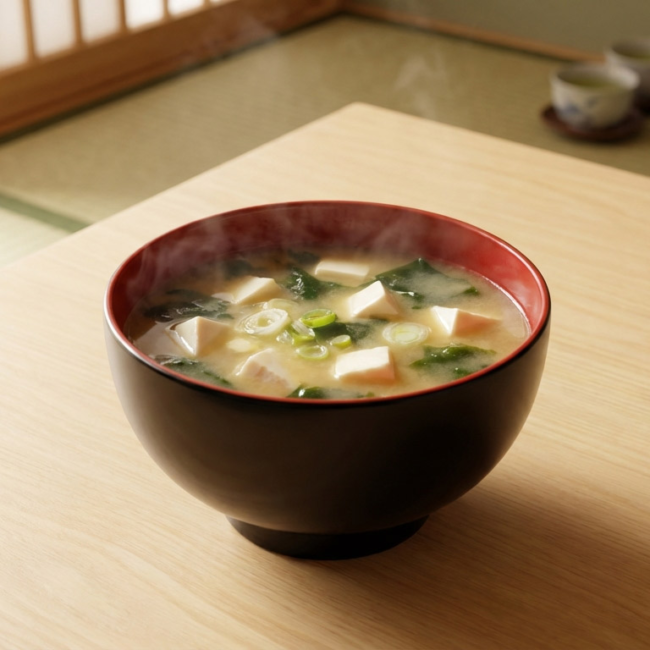
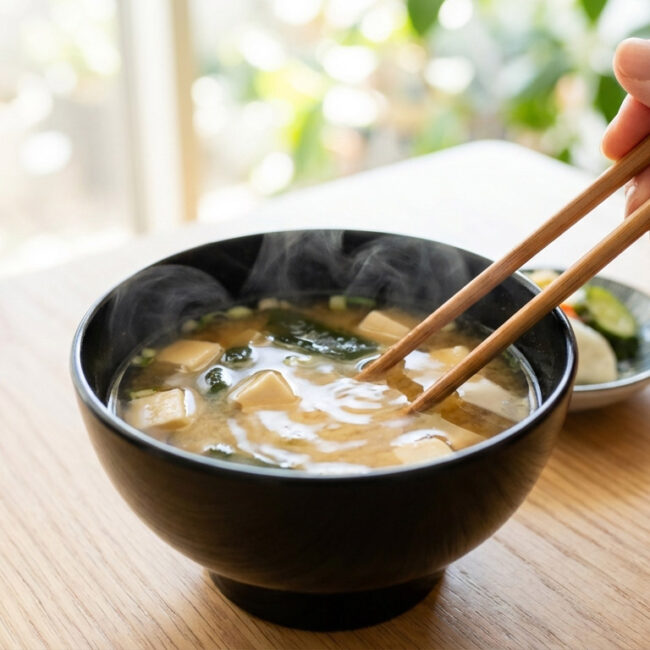
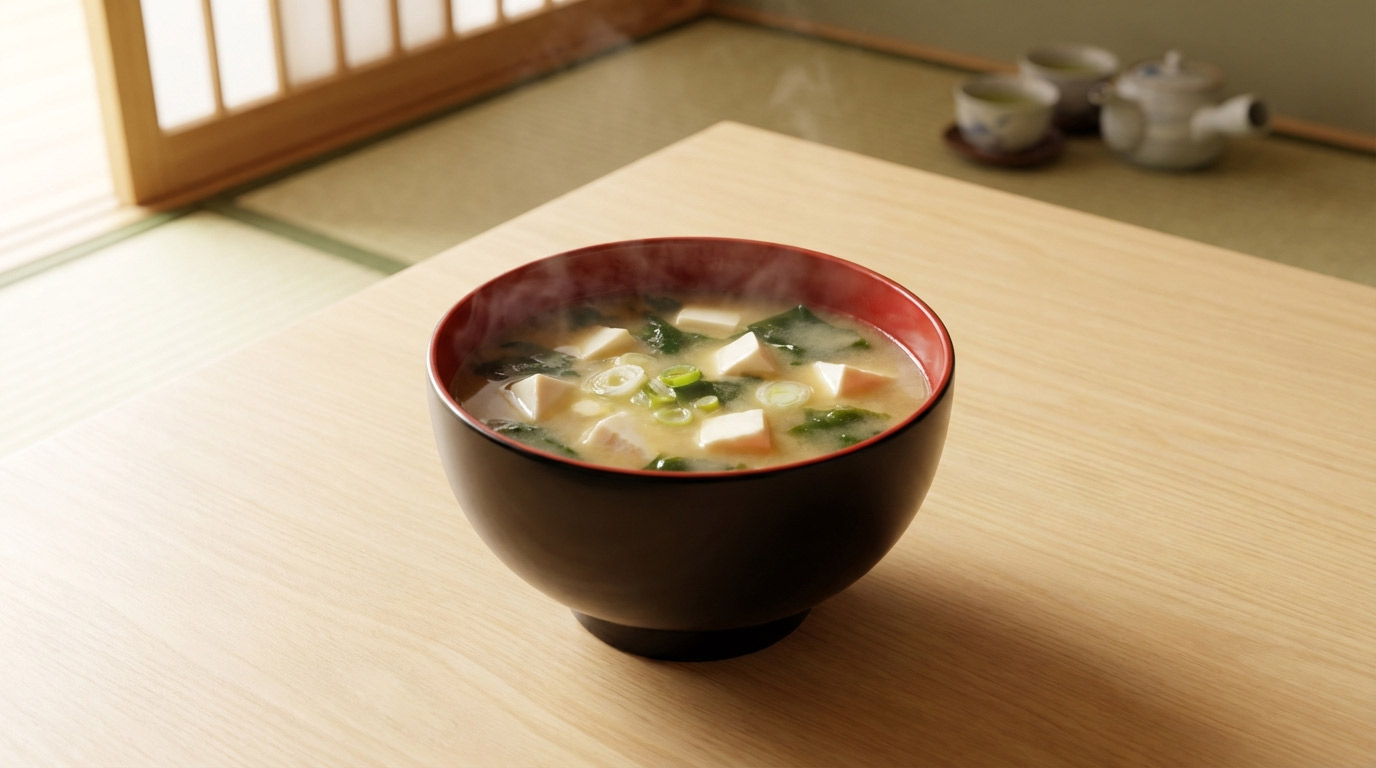
Miso Soup is the foundational soul of Japanese cuisine, representing the principle of “Ichiju-Sansai” (one soup, three sides). Culturally, it is consumed daily, often for breakfast, as it is believed to promote longevity and gut health due to the fermented nature of miso paste. The soup is an exercise in “Umami” the fifth savory taste. It starts with “Dashi,” a clear broth made from kombu (dried kelp) and katsuobushi (bonito flakes), which provides a deep oceanic base. By adding miso paste fermented soybean paste the broth becomes cloudy, rich, and complex. It is a dish that respects balance: the soft silkiness of tofu, the saltiness of the sea, and the refreshing bite of green onions.