













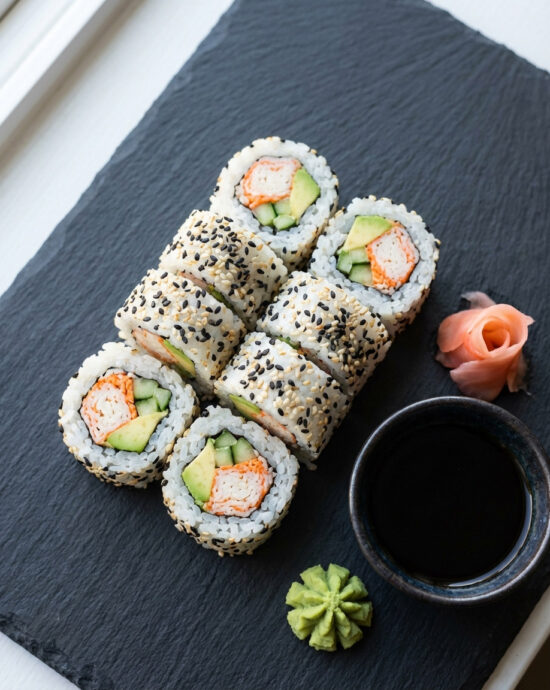

- Preparing the Sushi Rice and Nori
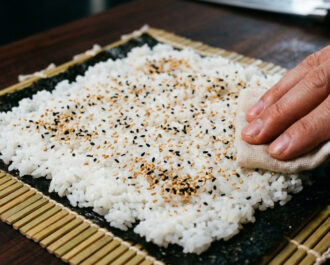
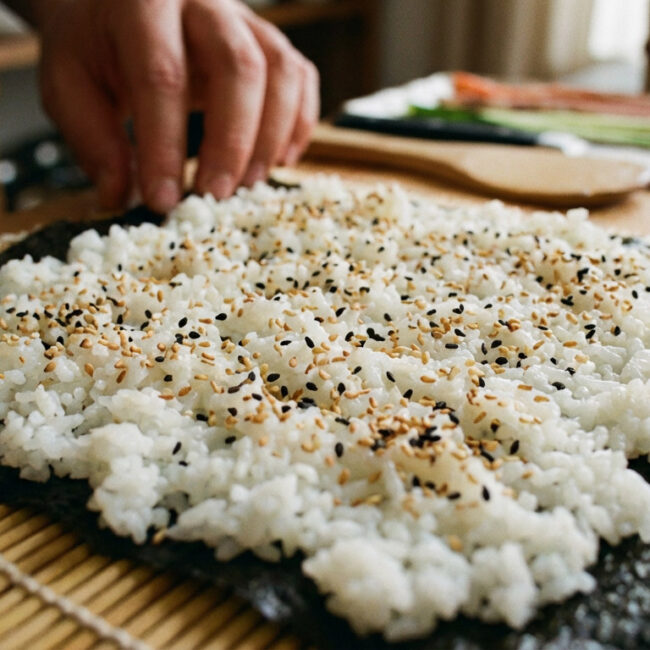
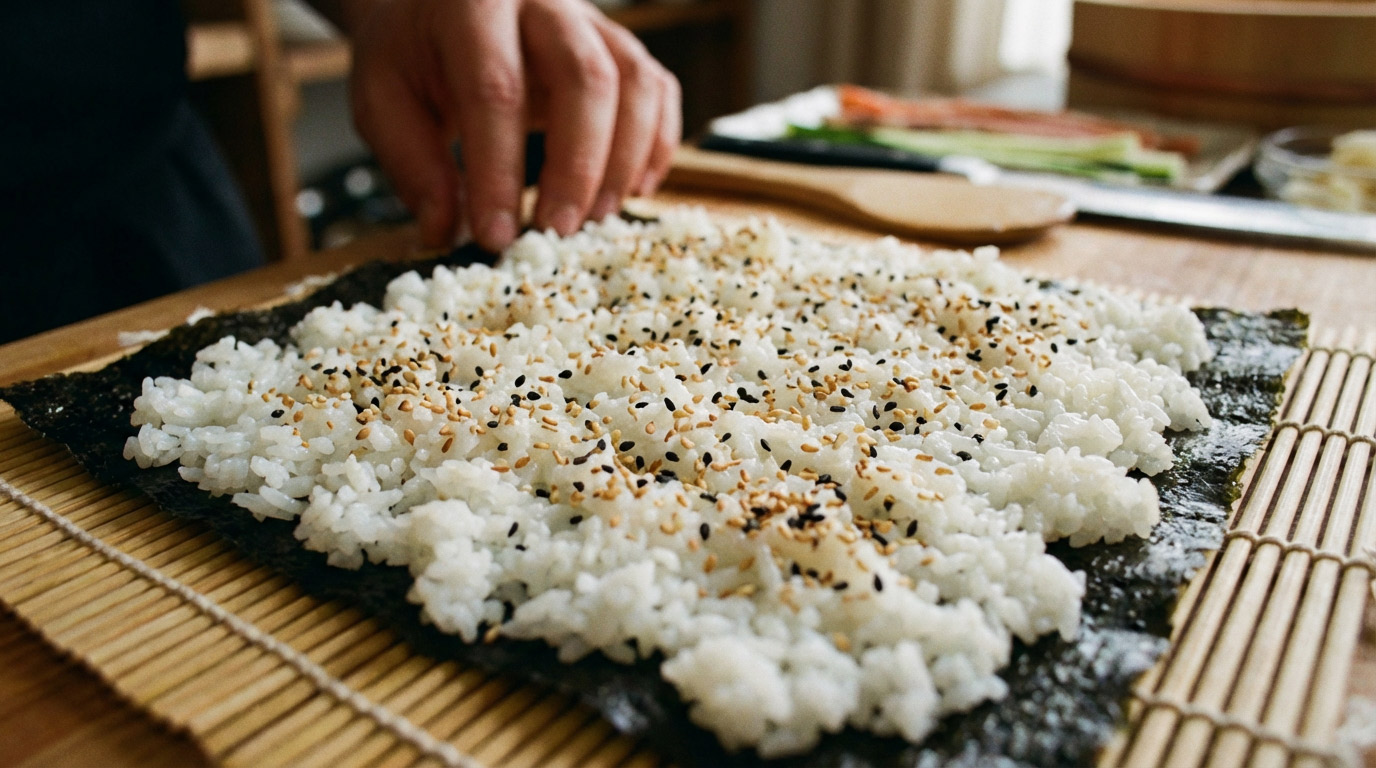
Lay a bamboo rolling mat (makisu) on a flat surface and cover it with plastic wrap to prevent sticking. Place a half-sheet of nori, shiny side down. Spread a thin, even layer of seasoned sushi rice over the nori, leaving no gaps. Sprinkle toasted sesame seeds over the rice. Flip the nori over so the rice is now facing down on the plastic wrap.
- Layering the Filling
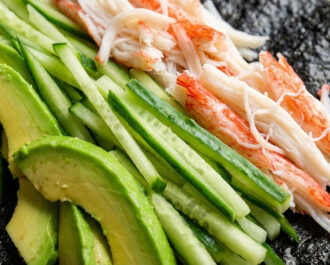
In a small bowl, mix the shredded imitation crab with a tiny bit of mayonnaise. Place a line of the crab mixture across the center of the nori. Add 2-3 slices of creamy avocado and a few strips of crunchy, julienned cucumber next to the crab. The key is to keep the fillings centered and not overfill, which ensures the roll remains tight and easy to cut.
- Rolling and Slicing
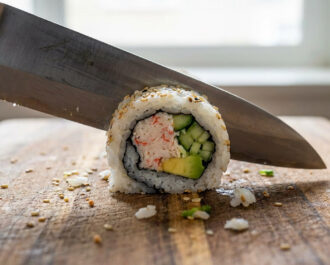
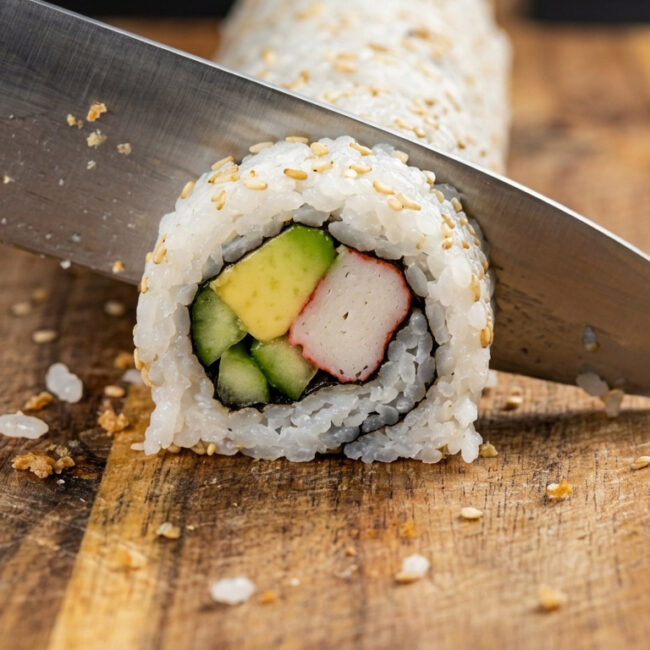
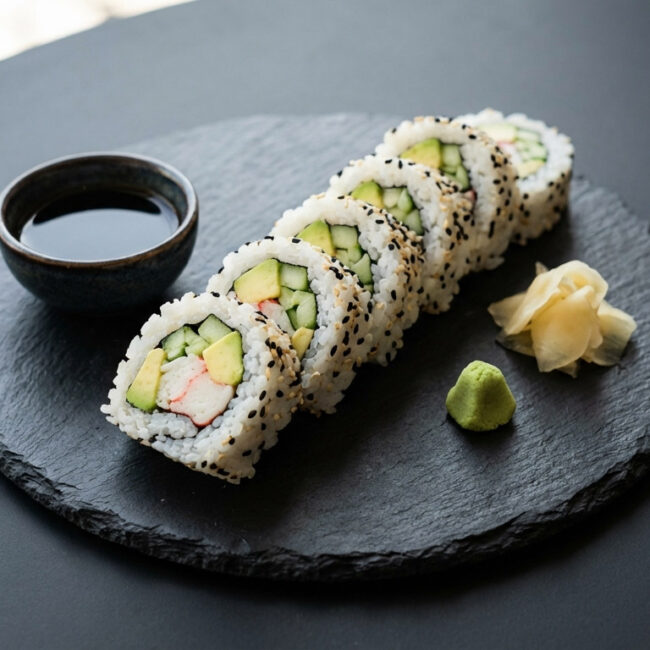
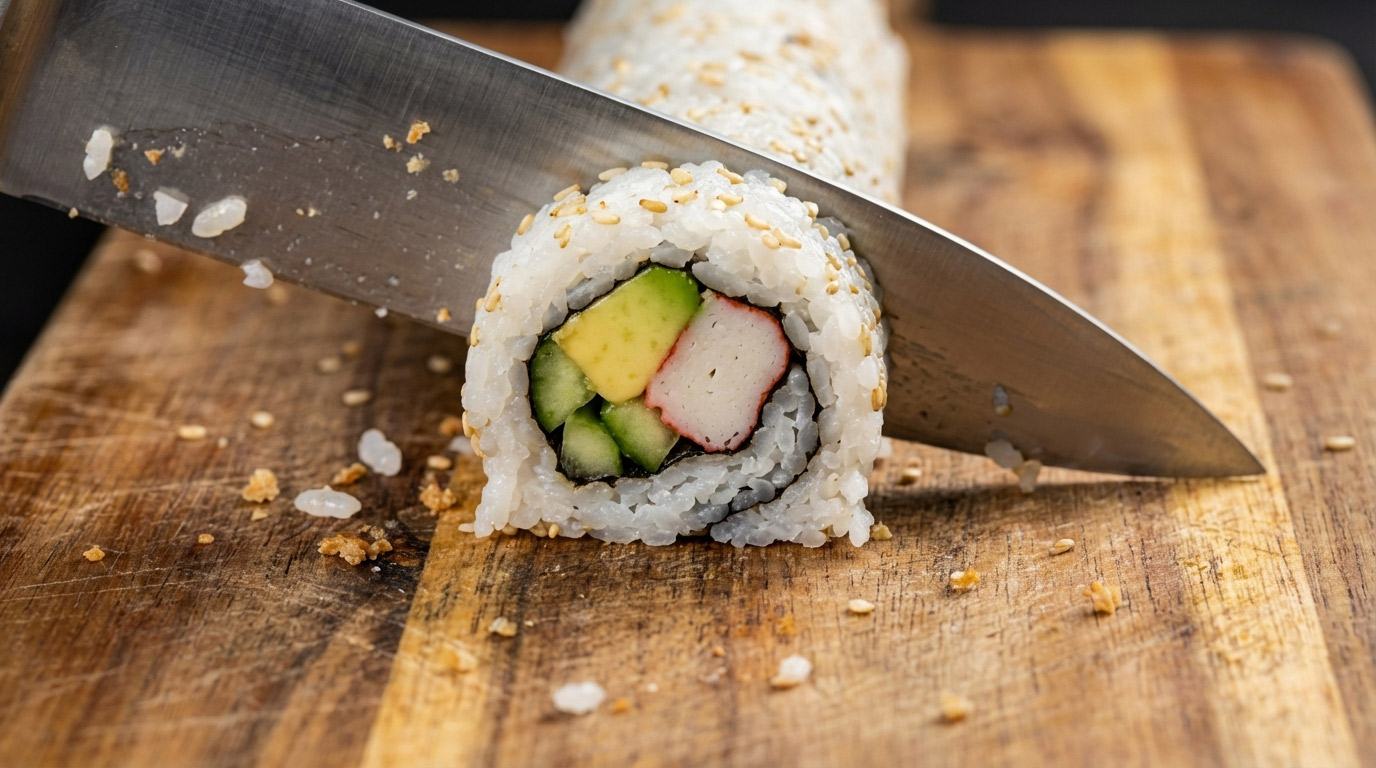
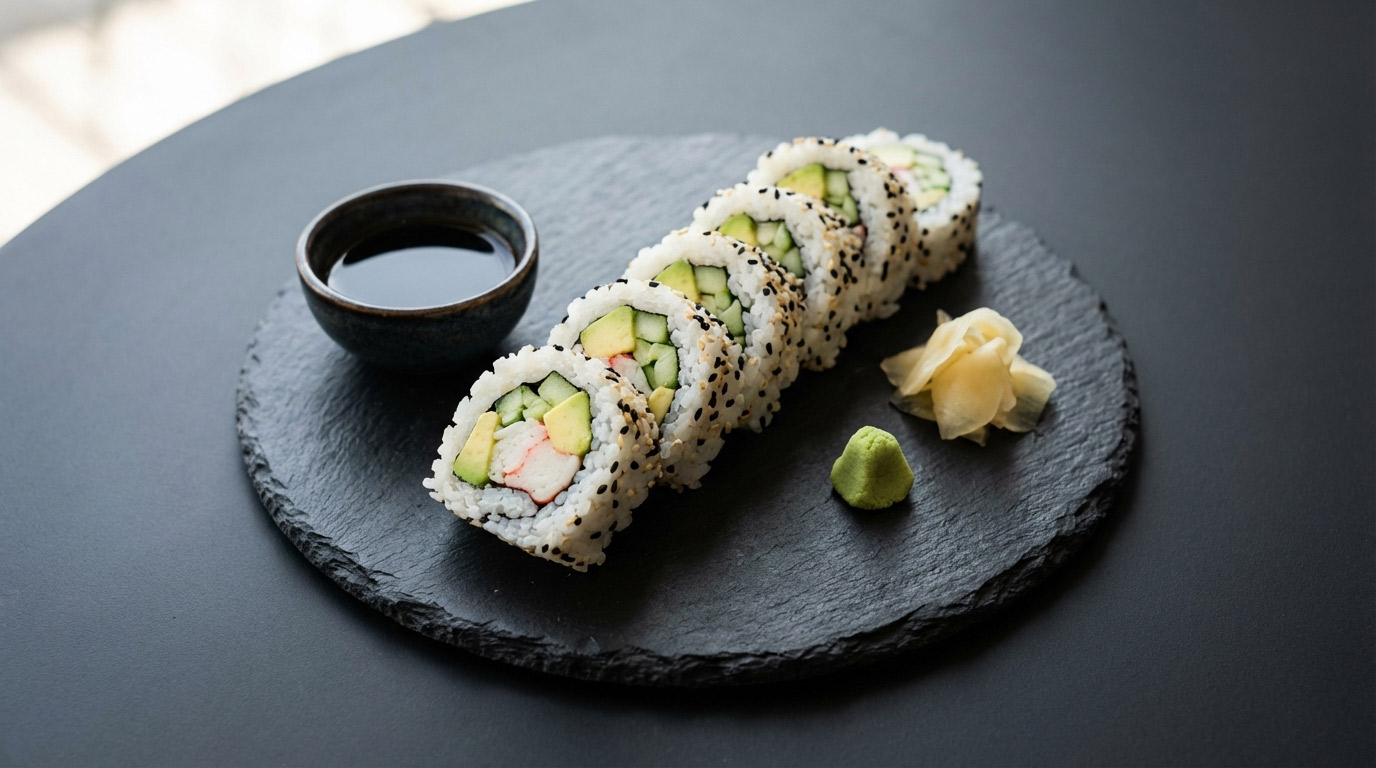
Using the bamboo mat, lift the bottom edge of the nori/rice and roll it over the filling, tucking it in tightly. Continue rolling while applying gentle, even pressure to form a uniform cylinder. Remove the mat and, using a very sharp, wet knife, slice the roll into 6 or 8 even pieces. The wet blade ensures a clean cut through the sticky rice. Serve with ginger, wasabi, and soy sauce.
- Калории:350 ккал%17%
- Белок:12 g%24%
- Углеводы:55 g%21%
- Сахар:5 g%6%
- Соль:1.2 g%20%
- Энергия:1465 кДж%17%
- Толстый:10 g%14%
The California Roll is the most popular “gateway” to the world of sushi, credited with sparking the global sushi phenomenon in the 1960s and 70s. Originally created in Los Angeles or Vancouver (the origin is still debated) by Japanese chefs, it was designed to introduce sushi to a Western audience who were hesitant about raw fish and seaweed. By hiding the nori (seaweed) on the inside known as “Uramaki” or inside-out roll and using creamy avocado and imitation crab, it became a cultural icon. It represents the perfect fusion of traditional Japanese technique and Western palate preferences