












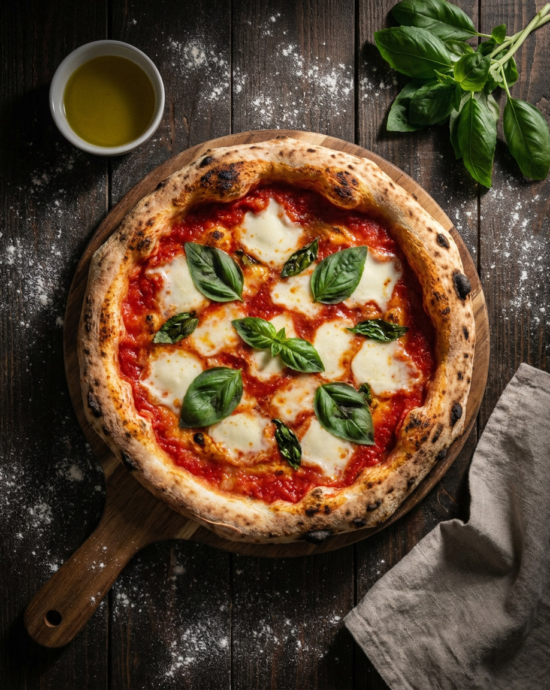

- Shaping the Artisanal Crust
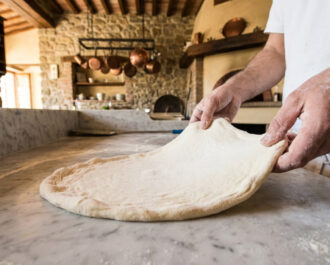
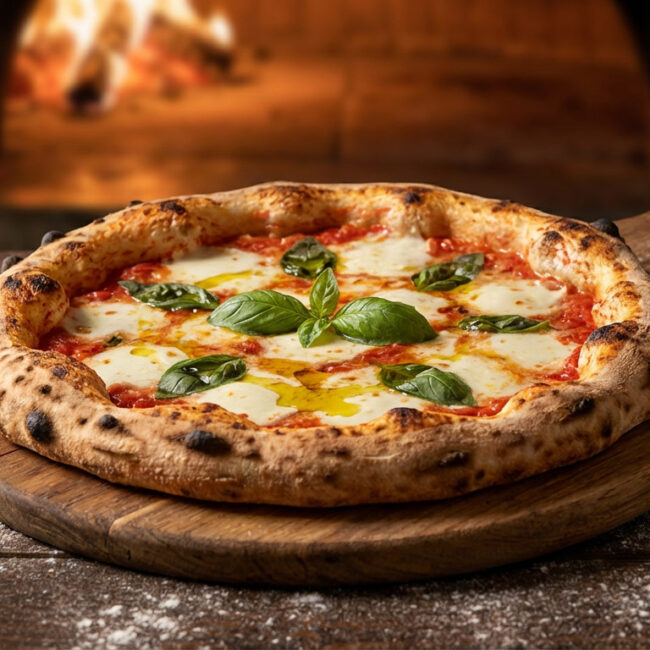
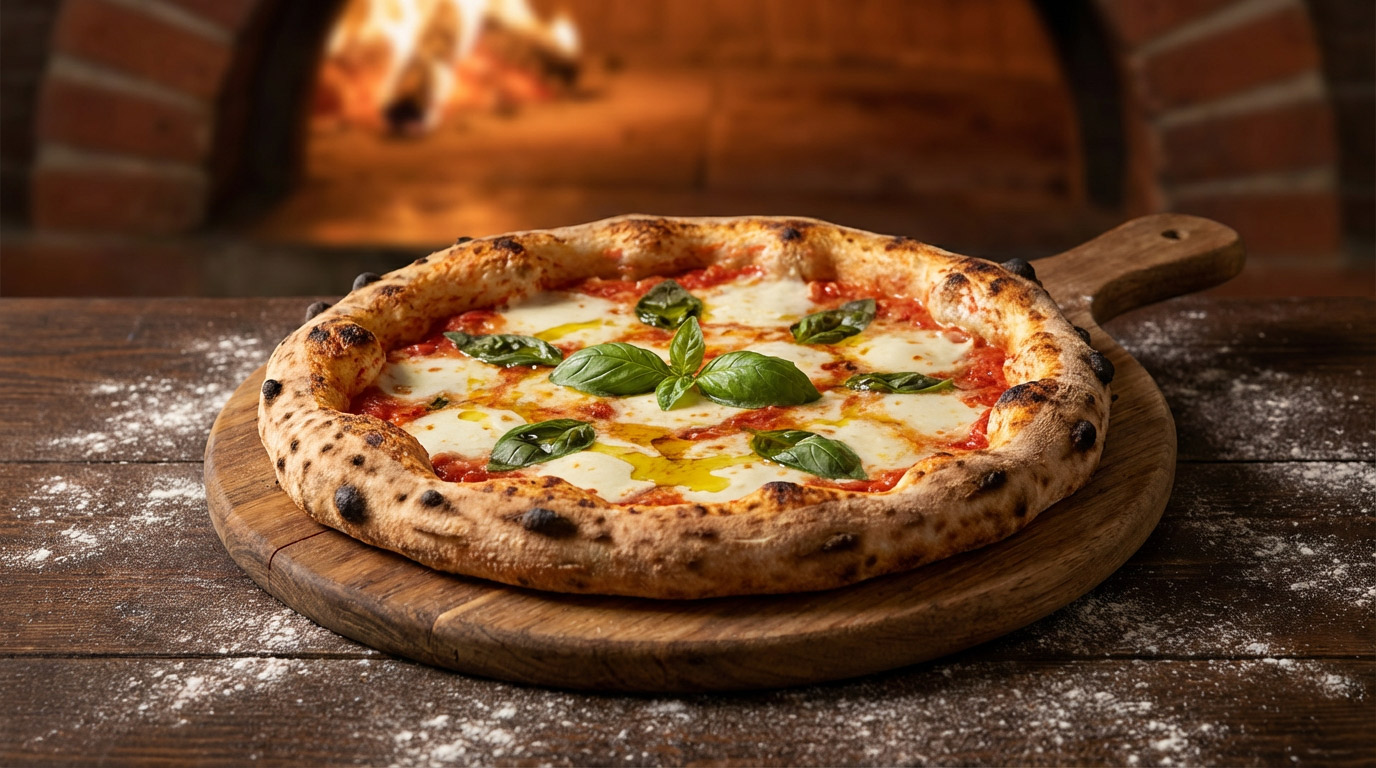
Place your dough ball on a floured surface. Using your fingers, press from the center outward to create a thin base with a raised edge (the cornicione). Do not use a rolling pin, as it would squeeze the air out of the crust. The air pockets are what create the light, bubbly, and charred texture typical of Neapolitan pizza.
- Topping with the Italian Colors
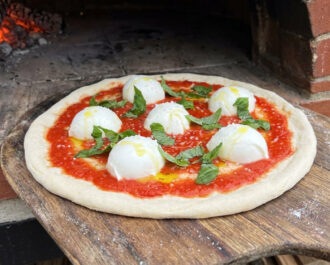
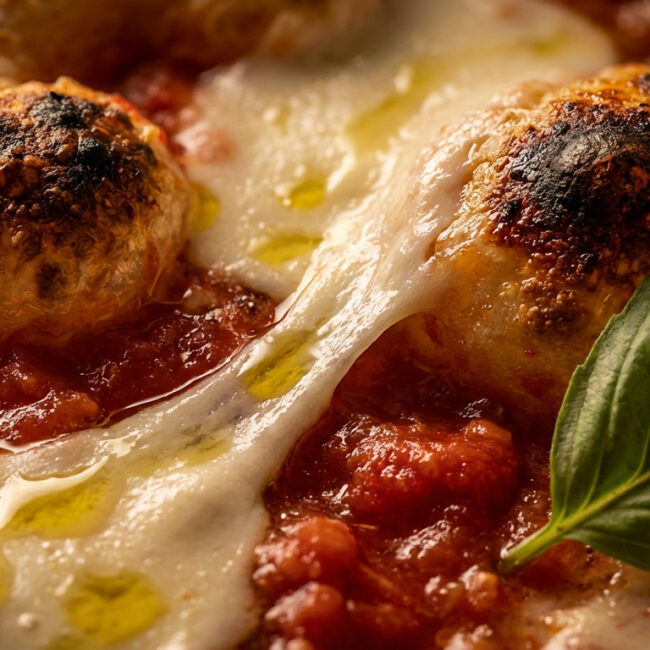
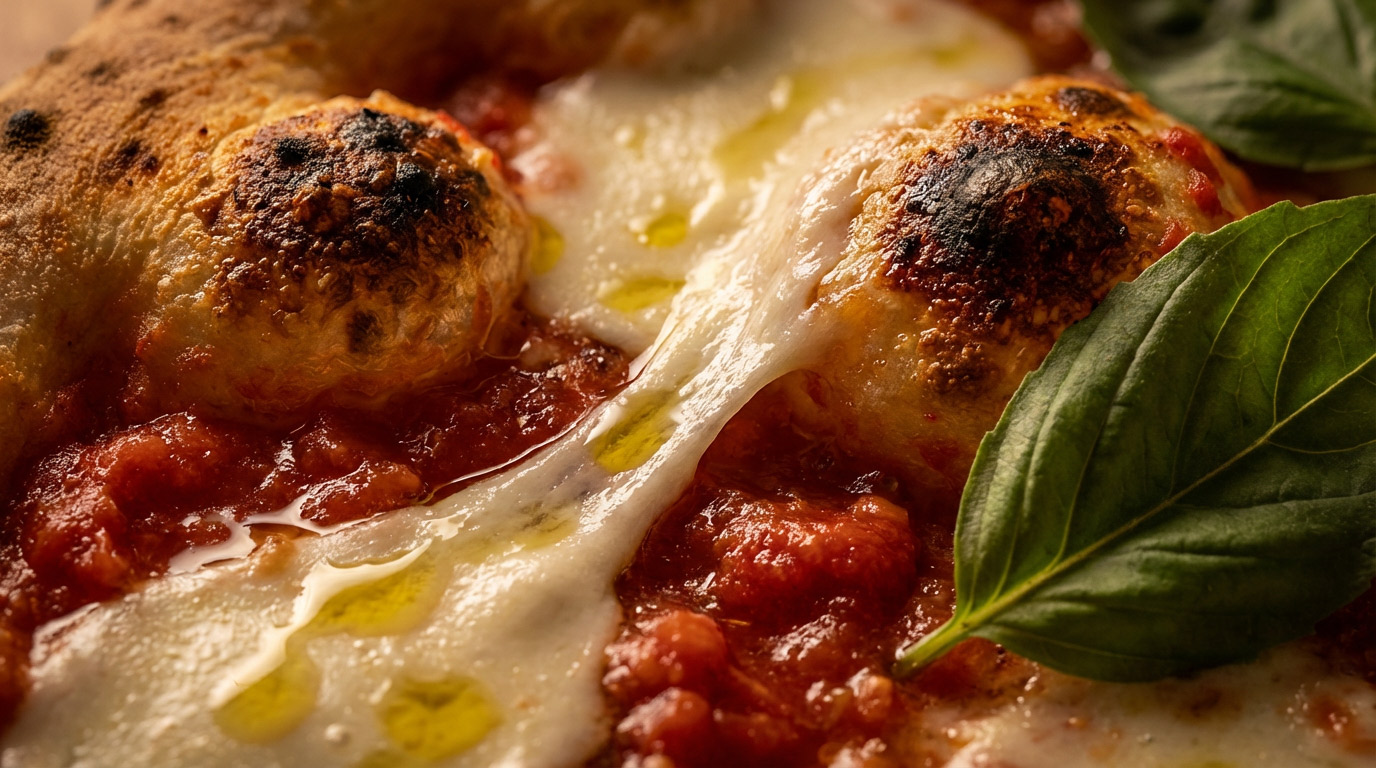
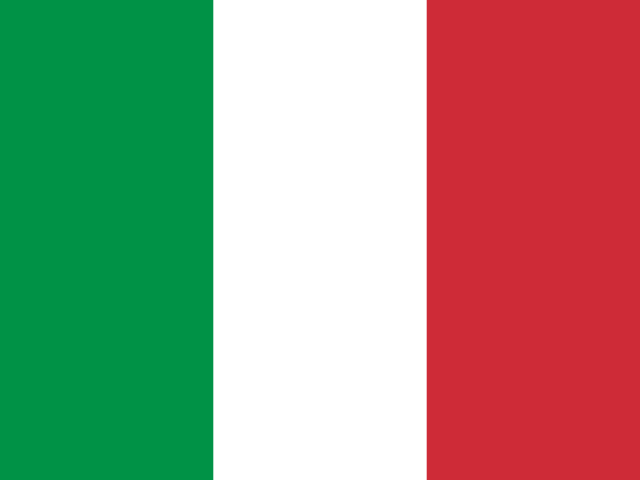
Spread the crushed San Marzano tomatoes over the center of the dough in a thin layer. Place the pieces of fresh mozzarella evenly across the sauce. Drizzle with a little olive oil and add a few basil leaves. The tomatoes provide the acidity, the cheese the richness, and the basil the aromatic freshness that makes this pizza legendary.
- High-Heat Blistering
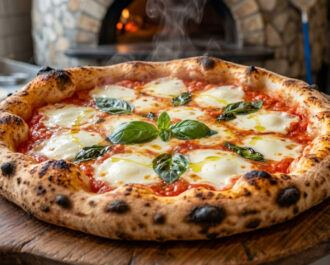
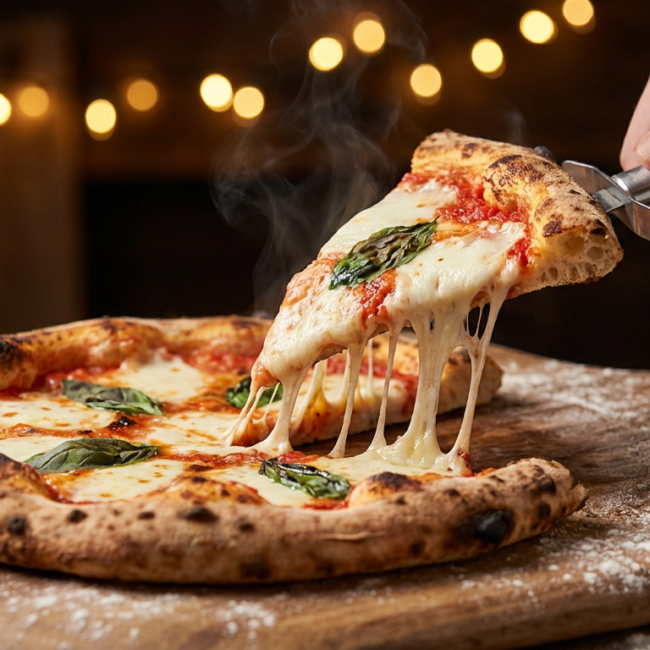
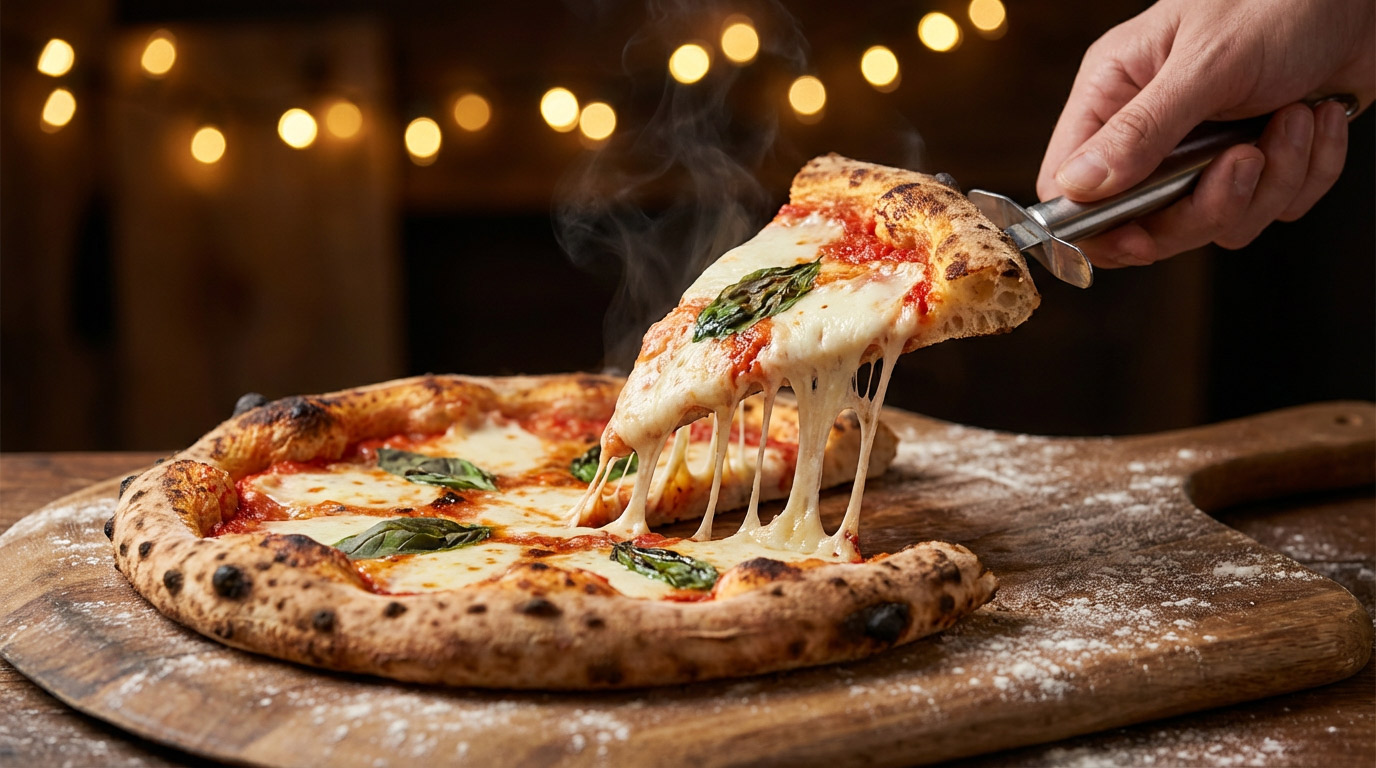
Ideally, bake in a pizza oven at 800°F (430°C) for 90 seconds, or in a home oven at its highest setting on a preheated pizza stone for 6-8 minutes. The crust should have "leopard spots" (small charred bubbles), the cheese should be melted but not browned, and the basil should be wilted but still fragrant. Serve immediately.
- Calories:520 kcal%26%
- Protein:20 g%40%
- Carbohydrates:65 g%25%
- Sugar:4 g%4%
- Salt:1.8 g%30%
- Energy:2175 kJ%26%
- Fat:18 g%26%
Pizza Margherita is the mother of all modern pizzas, created in 1889 in Naples, Italy. Legend says it was made by pizzaiolo Raffaele Esposito to honor Queen Margherita of Savoy, using toppings that represented the colors of the Italian flag: red (tomato), white (mozzarella), and green (basil). Culturally, it is a protected heritage dish (STG), emphasizing that beauty lies in the quality of the simplest ingredients. A true Margherita is defined by a thin, charred crust, sweet San Marzano tomatoes, and the creamy pull of fresh buffalo mozzarella.