














- The "Peeling" for Smoothness
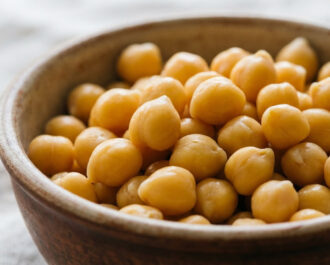
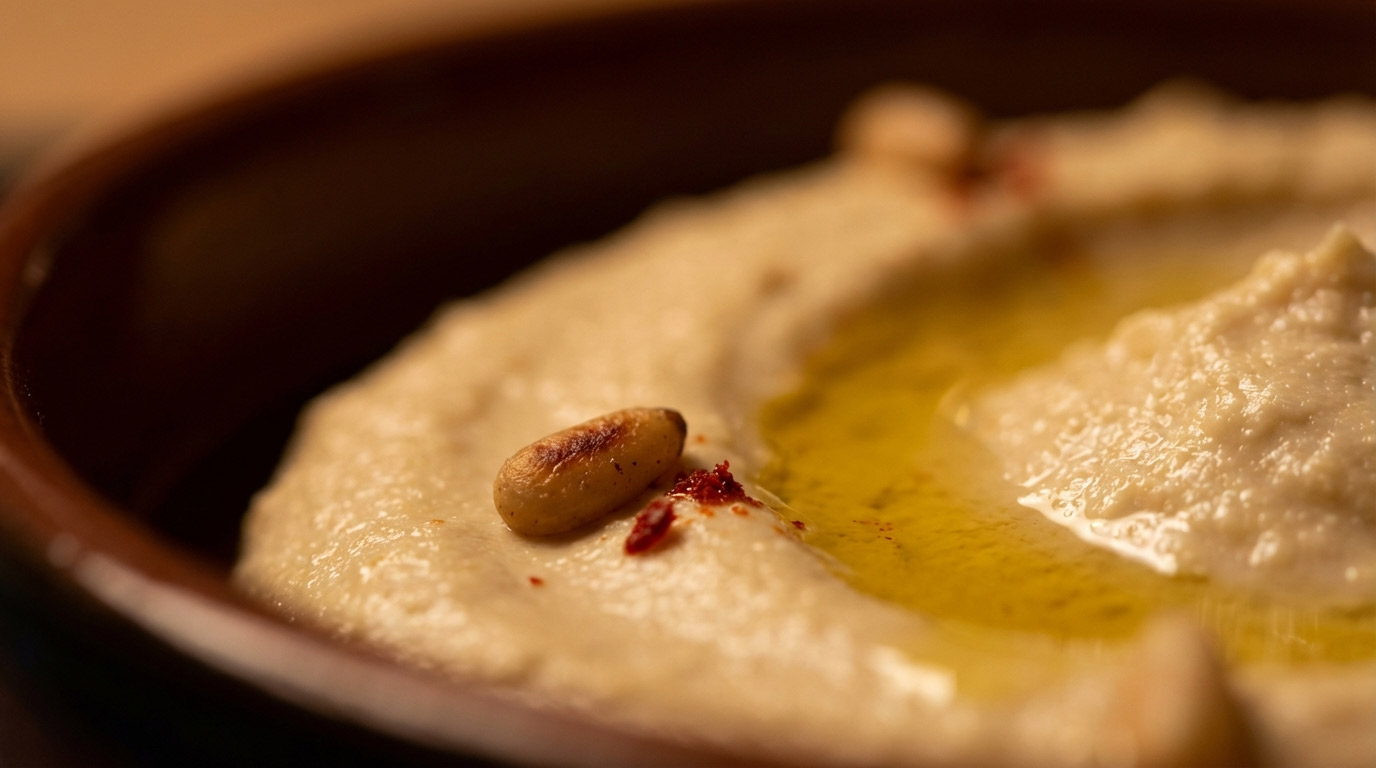
For the most luxurious texture, take the extra 10 minutes to pinch the skins off the cooked chickpeas. While tedious, this is the difference between a grainy dip and a restaurant-quality silk hummus. If using canned chickpeas, simmer them for 15 minutes with a pinch of baking soda first; this softens the skins so much they almost dissolve or fall off easily.
- The Whipped Tahini Base
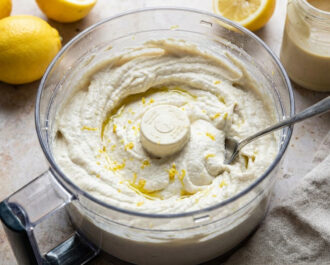
In a food processor, blend the tahini, lemon juice, salt, and garlic first. Process for 2-3 minutes until the mixture turns pale, thick, and looks "whipped." This aerates the sesame paste, ensuring the final hummus is light and fluffy rather than dense and oily.
- The Cold Emulsion
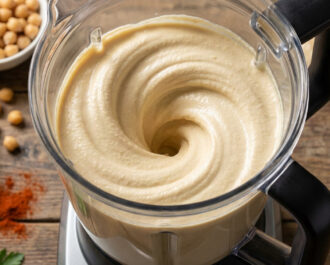
Add the chickpeas and cumin to the processor. While blending, drop in two ice cubes. The ice causes a temperature drop that helps emulsify the oils and solids into a bright white, ultra-smooth cream. Continue blending for at least 5 minutes. The longer you blend, the smoother it becomes.
- Calories:280 kcal%14%
- Protein:10 g%20%
- Carbohydrates:22 g%8%
- Sugar:1 g%1%
- Salt:0.8 g%13%
- Energy:1170 kJ%14%
- Fat:18 g%26%
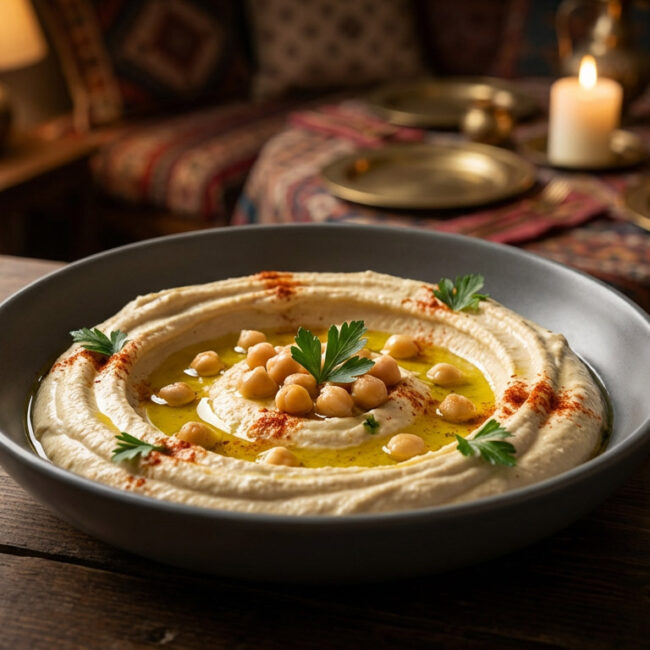
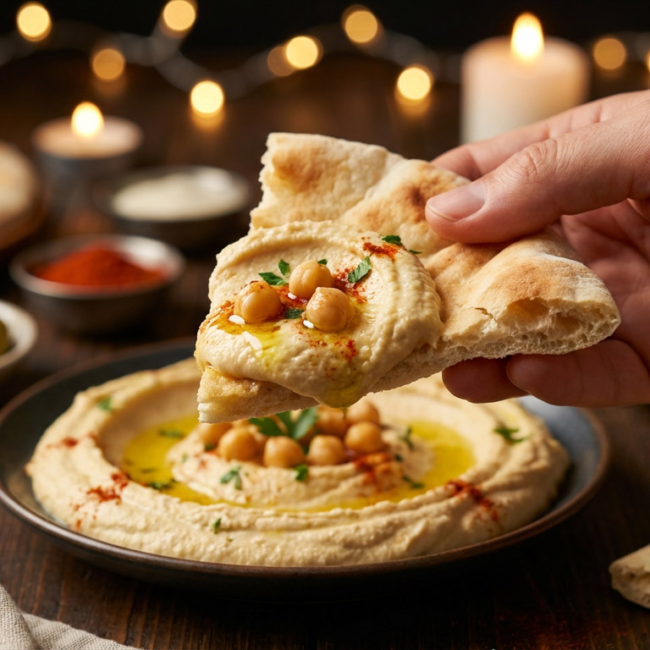
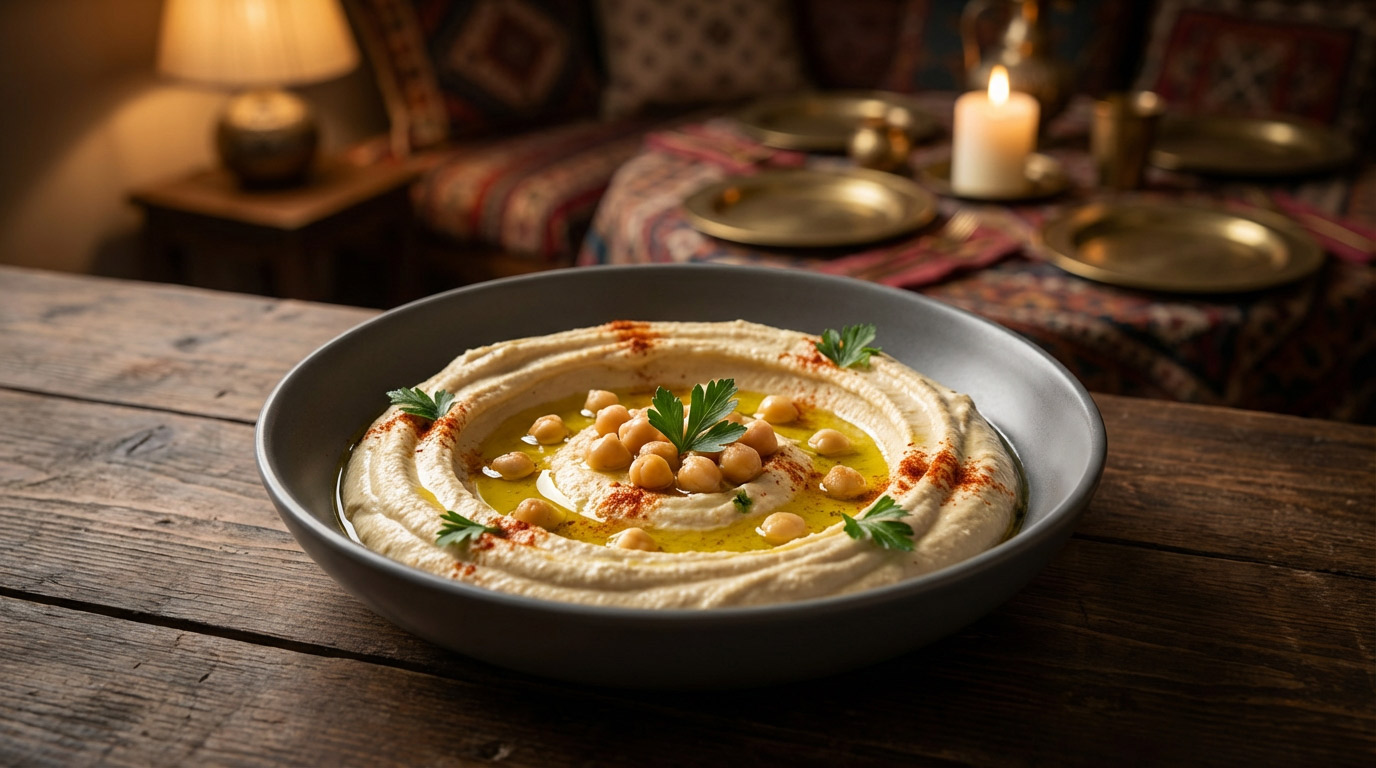
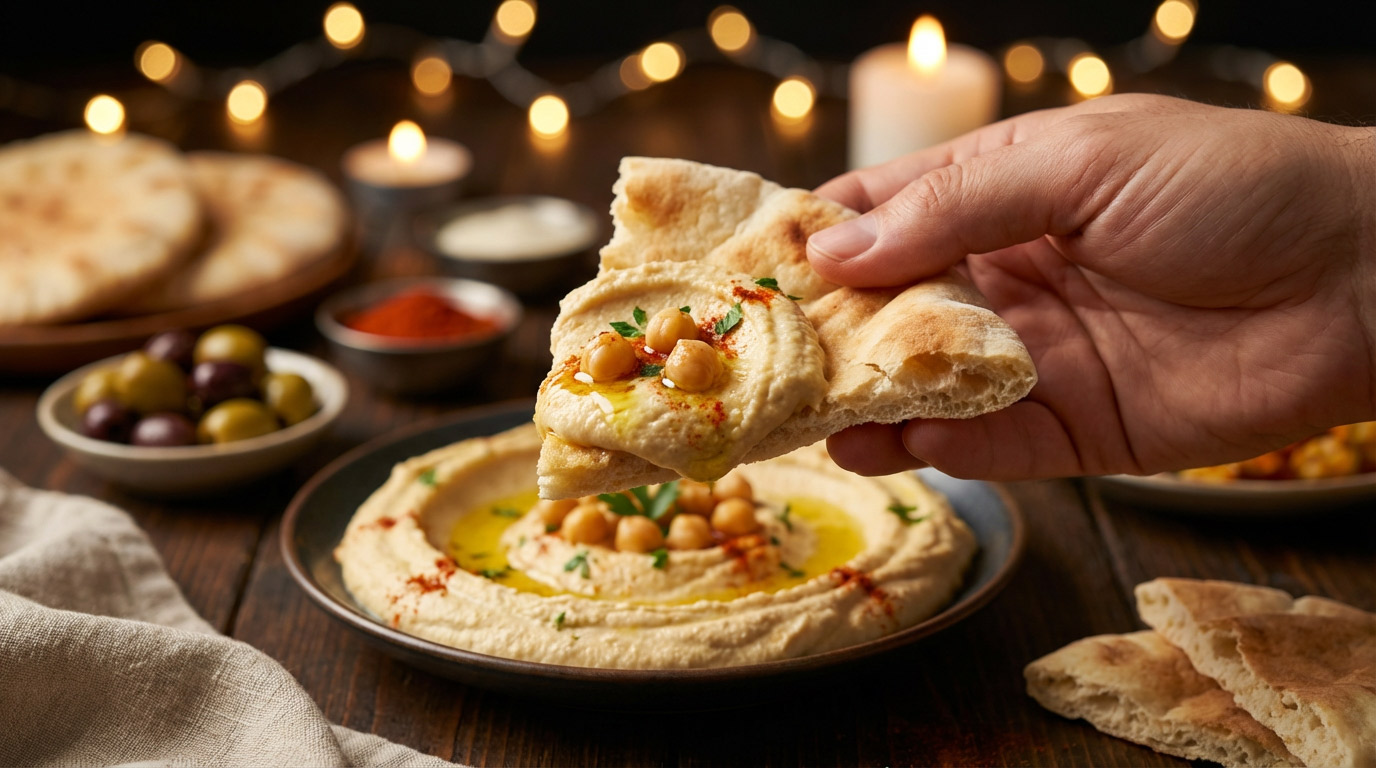
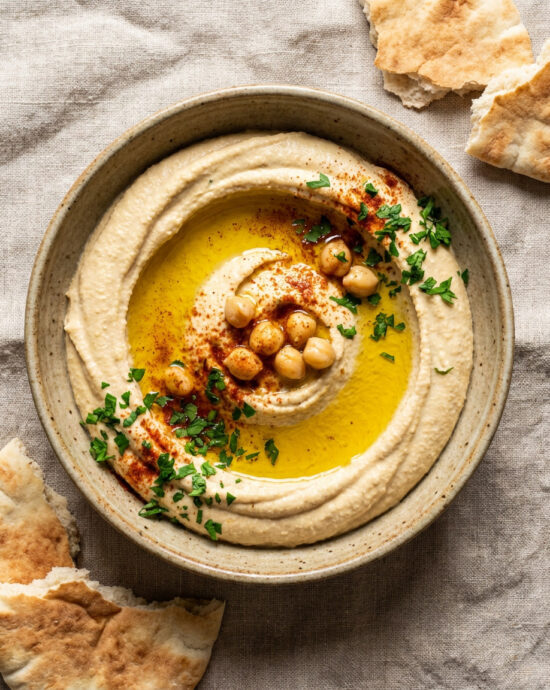
Hummus is perhaps the most famous culinary export of the Levant, a dish that transcends borders and represents the shared heritage of the Middle East. While many commercial versions exist, the authentic “Levantine Style” focuses on a high ratio of tahini (sesame paste) to chickpeas, resulting in a texture that is impossibly smooth, nutty, and light. Culturally, it is a symbol of hospitality and communal eating, almost always served as a part of a “Meze” spread. A true hummus is never just a dip; it is a warm, velvety base for olive oil, spices, and fresh herbs, traditionally scooped up with hot, puffed pita bread.