












- Mixing and The First Rise
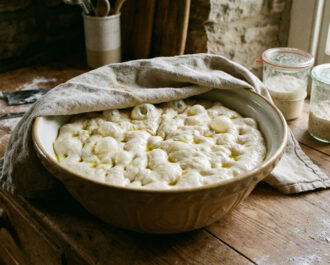
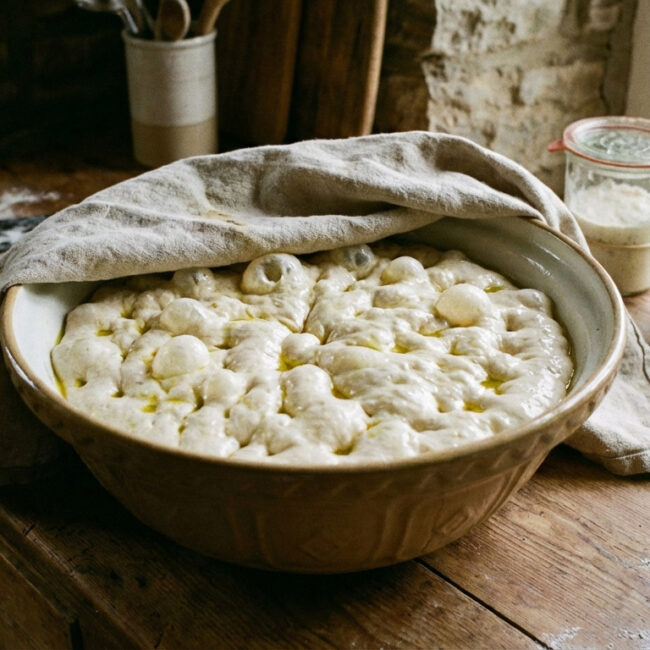
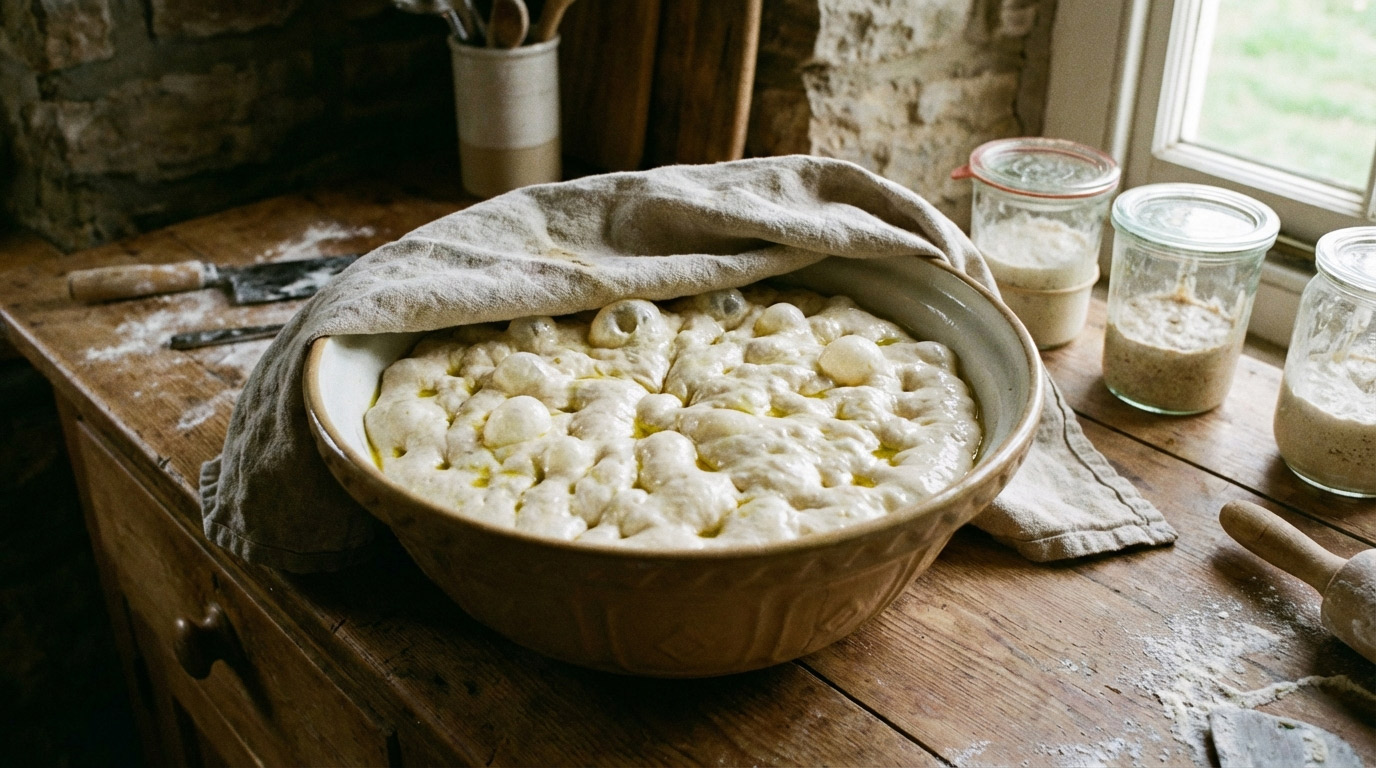
In a large bowl, whisk the warm water, yeast, and honey. Let it sit for 5 minutes until foamy. Add the flour and 2 tablespoons of olive oil, stirring with a wooden spoon until a sticky, shaggy dough forms. Cover the bowl with a damp cloth and let it rise in a warm spot for 2 hours, or until doubled in size. This slow rise develops the gluten structure without the need for manual kneading.
- The Dimpling Process
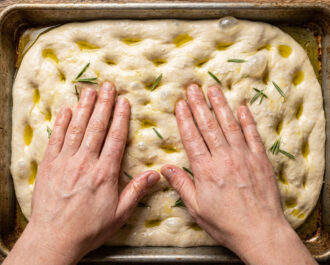
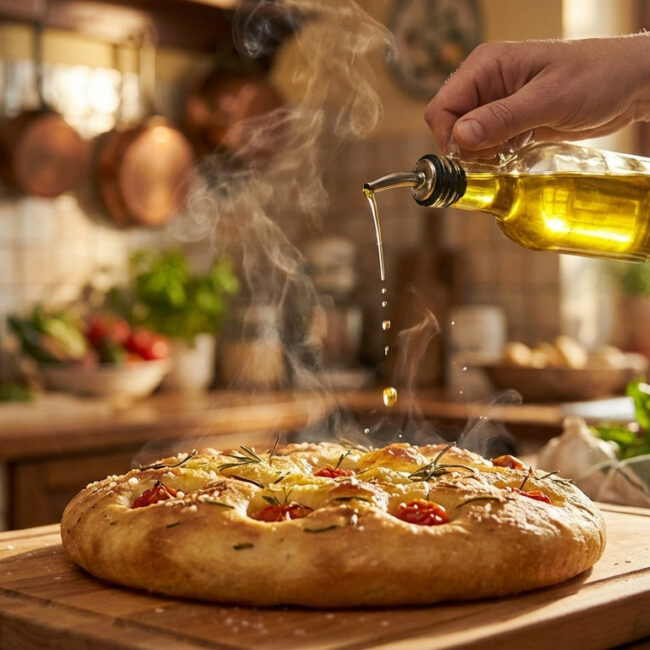
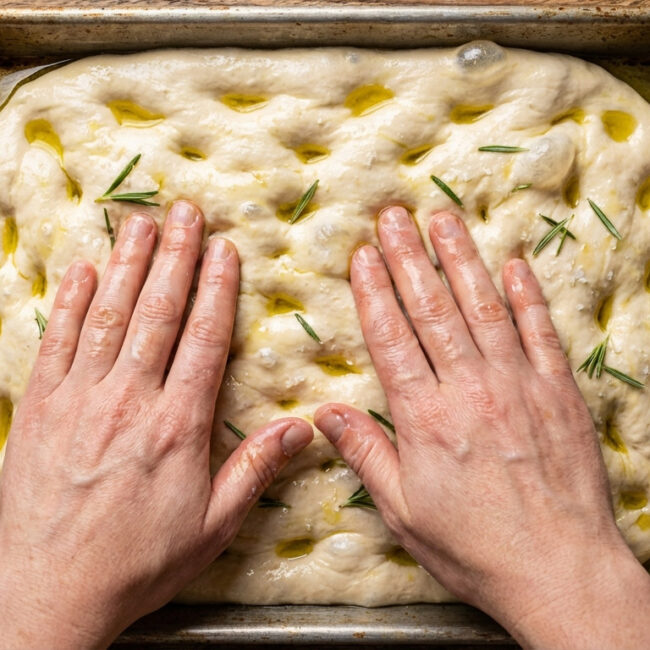
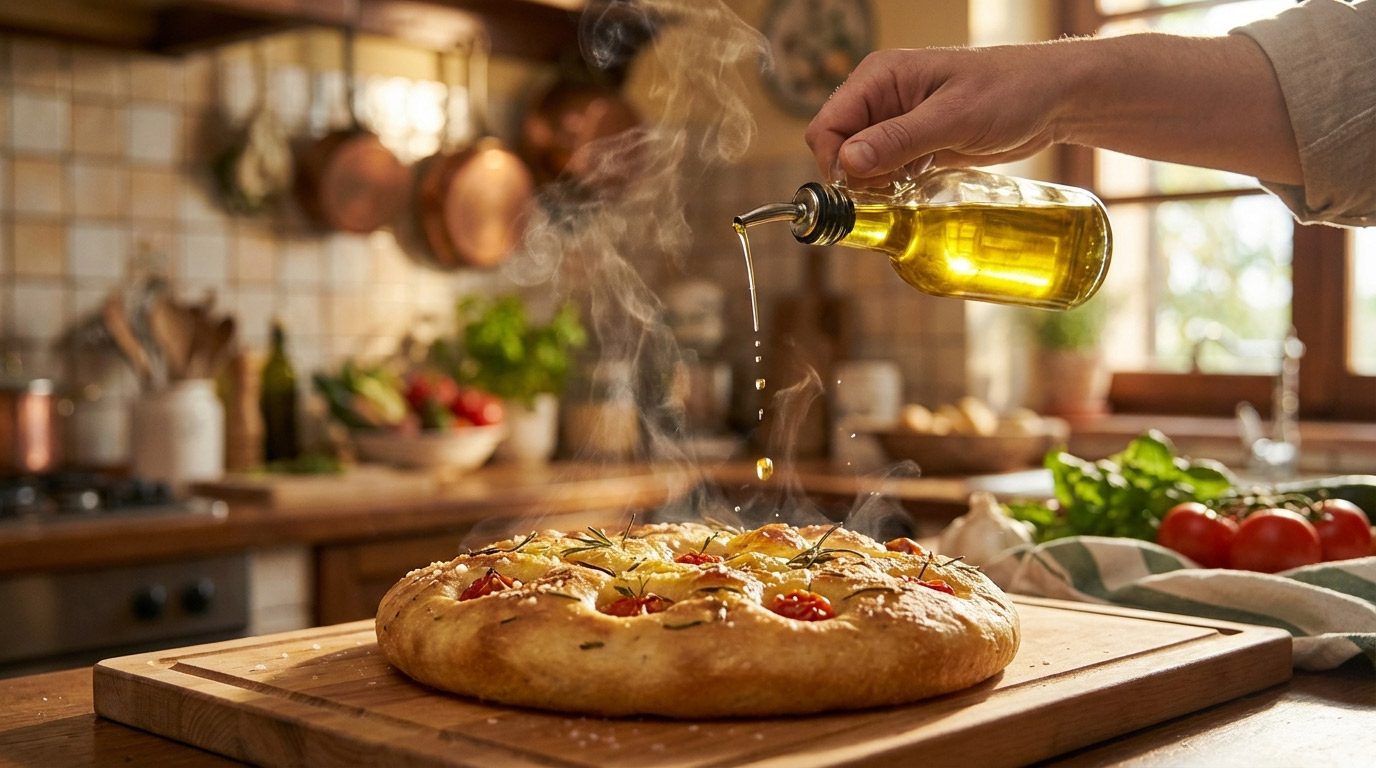
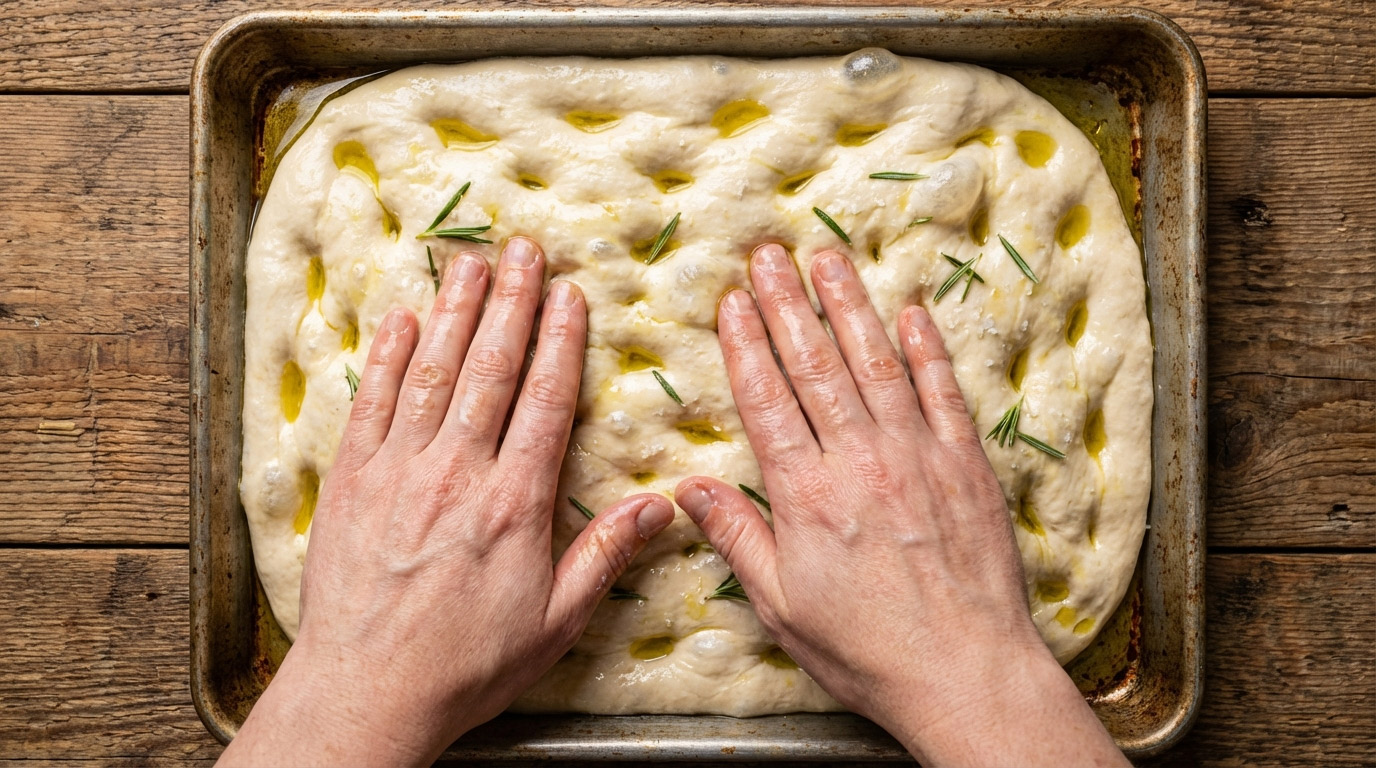
Pour half of the remaining olive oil into a rectangular baking pan. Transfer the dough to the pan and gently stretch it to the corners. Cover and let it rise for another 45 minutes. Use your fingertips to press deep "dimples" all over the surface of the dough. Pour the rest of the olive oil over the top so it pools in those holes this is what gives focaccia its iconic moist and crispy texture.
- Seasoning and Baking
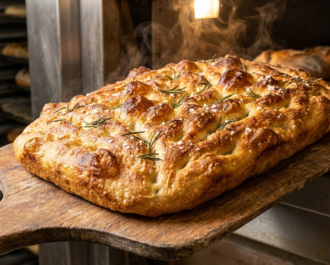
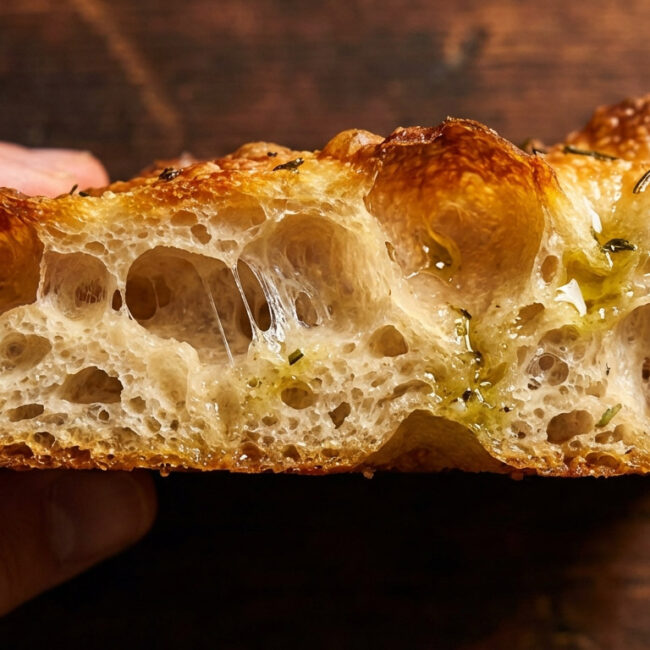
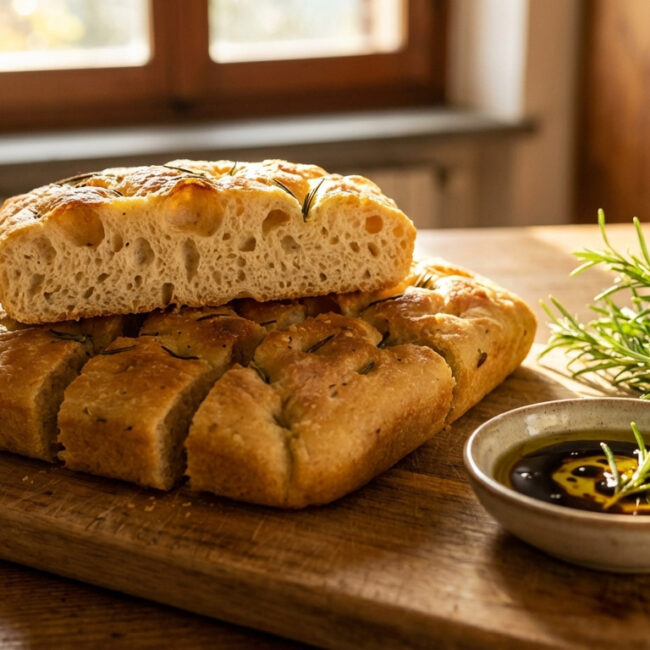
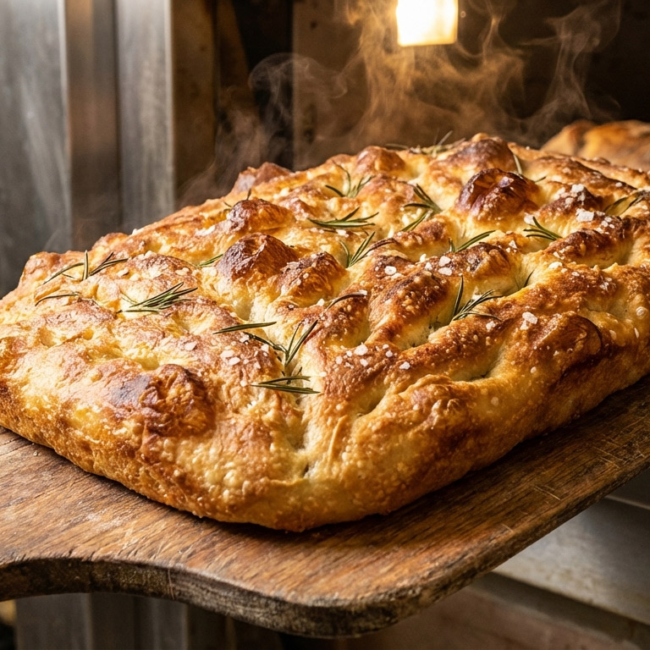
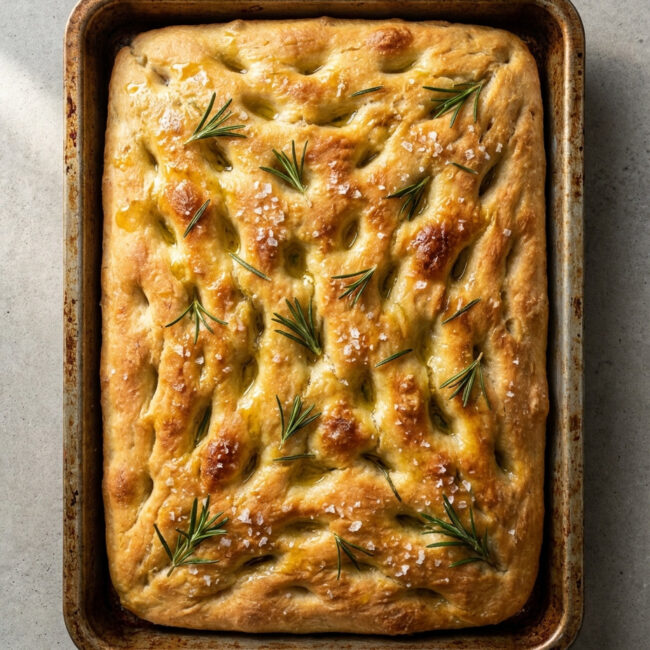
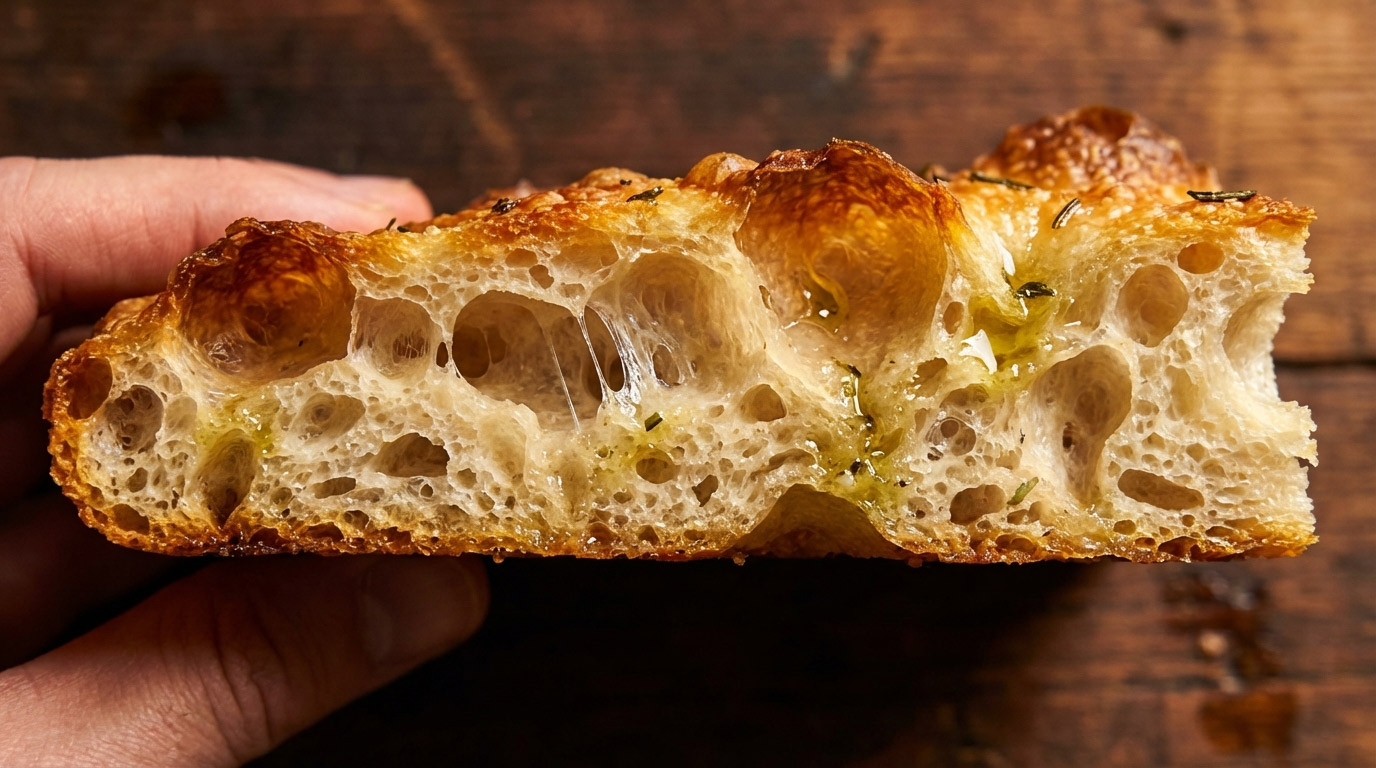
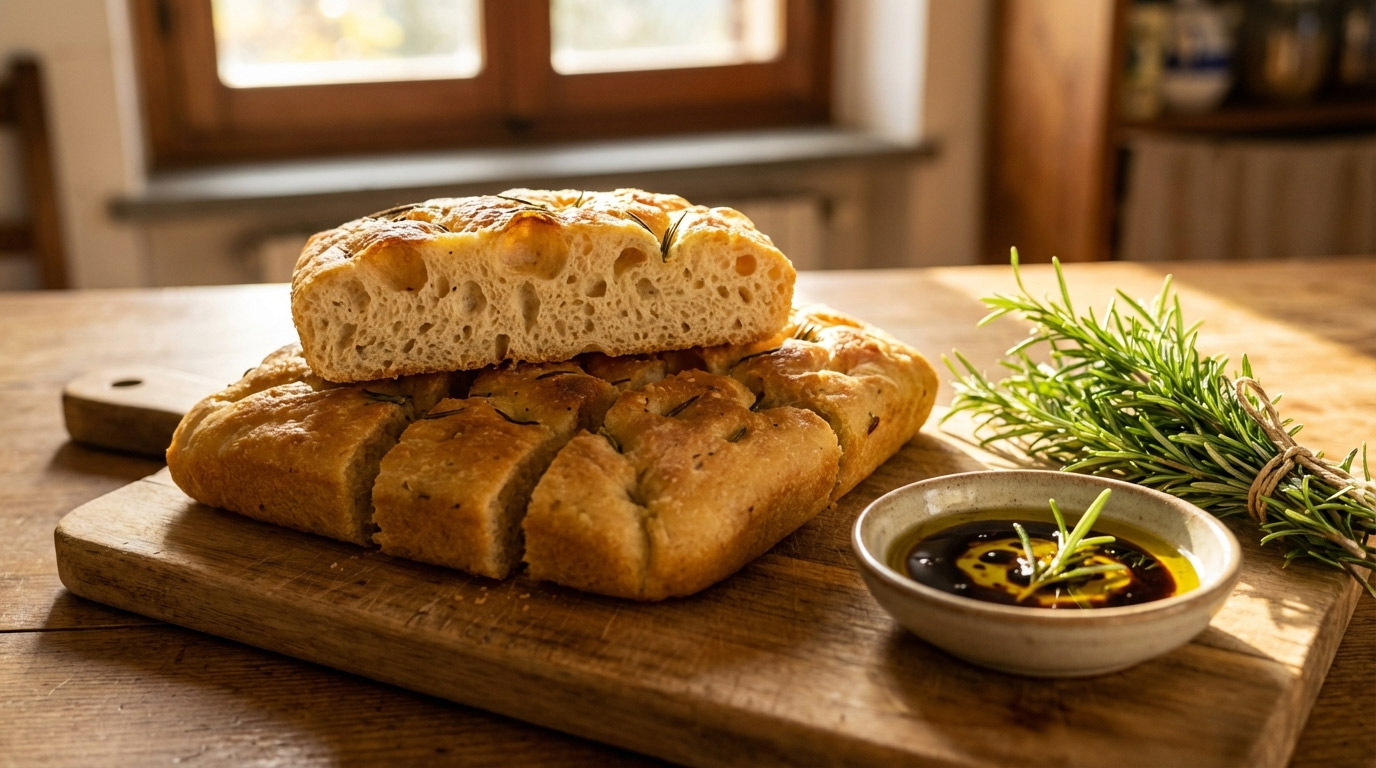
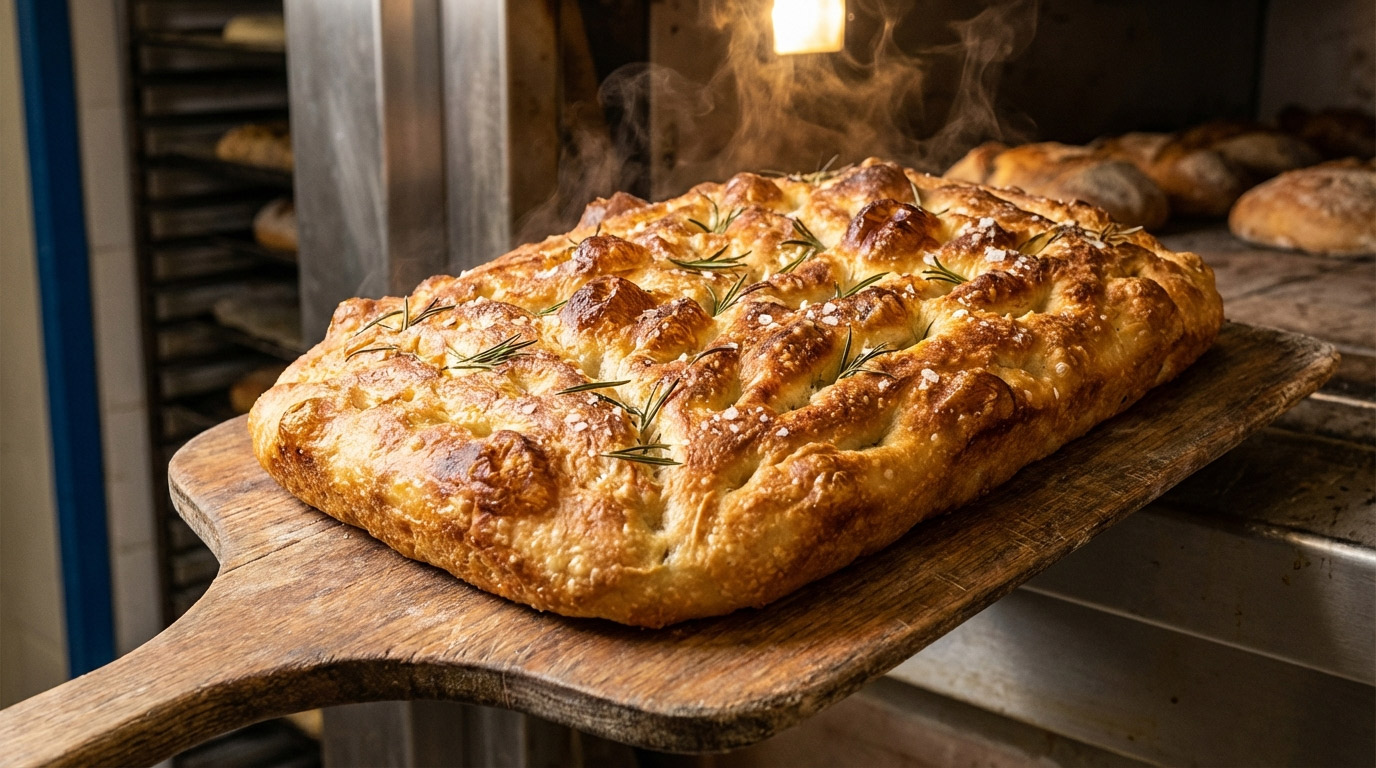
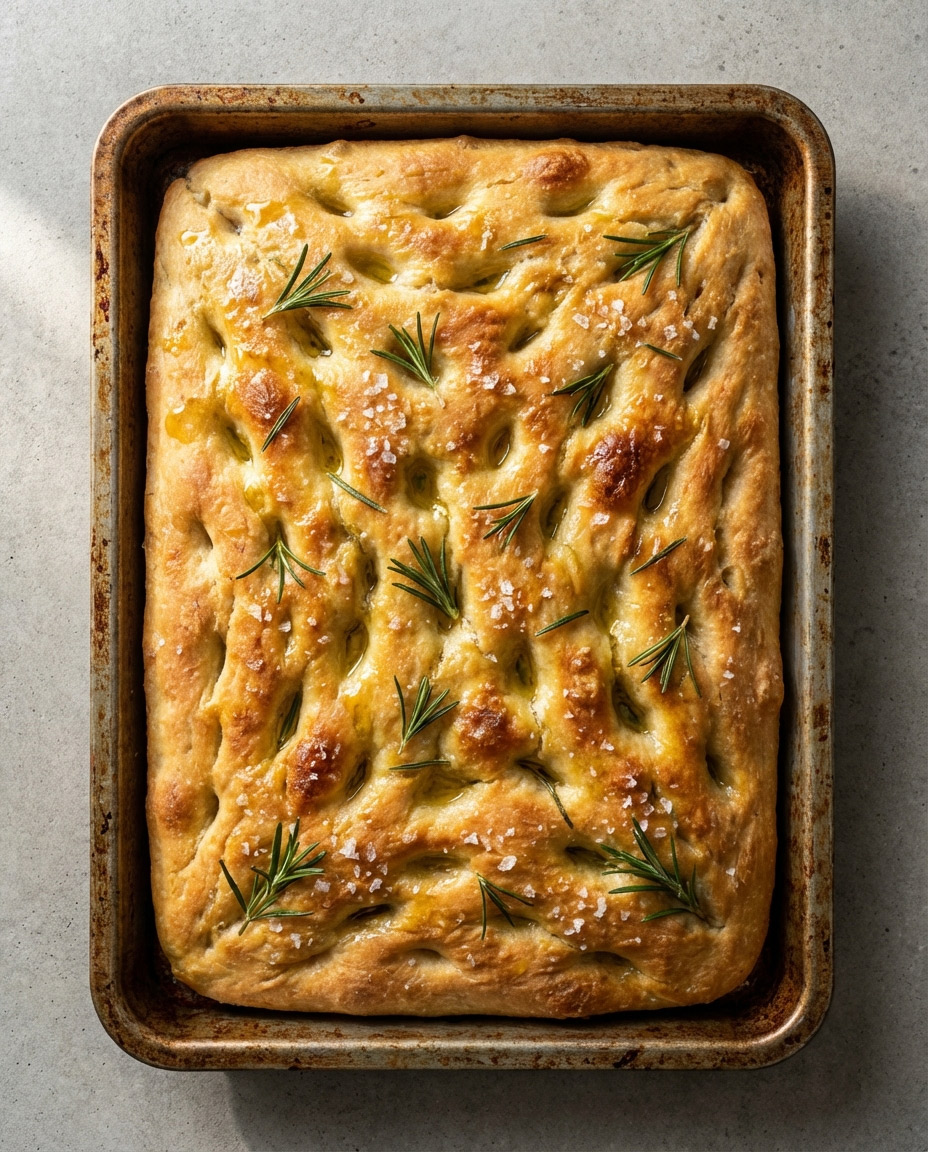
Sprinkle the fresh rosemary leaves and sea salt flakes generously over the dough. Bake at 425°F (220°C) for 20-25 minutes until the top is a deep golden brown and the edges are crispy. Remove from the oven and let it cool in the pan for 5 minutes so the bottom crust can absorb the remaining oil. Slicing into it should reveal a beautiful, airy interior.
- Calorieën:210 kcal%10%
- Eiwit:5 g%10%
- Koolhydraten:32 g%12%
- Suiker:1 g%1%
- Zout:0.8 g%13%
- Energie:880 kJ%10%
- Vet:7 g%10%
Focaccia is one of Italy’s most beloved and versatile breads, with roots stretching back to the ancient Etruscans or Greeks. The name comes from the Latin “panis focacius,” meaning “hearth bread.” Culturally, it is the soul of Ligurian cuisine, where it is often enjoyed for breakfast dipped in café latte or as a snack throughout the day. This no-knead version focuses on high hydration and long fermentation, allowing the yeast to do the work. The result is a bread that is crispy and golden on the outside, but airy and full of “crumb holes” on the inside, infused with the Mediterranean scents of olive oil and fresh rosemary.