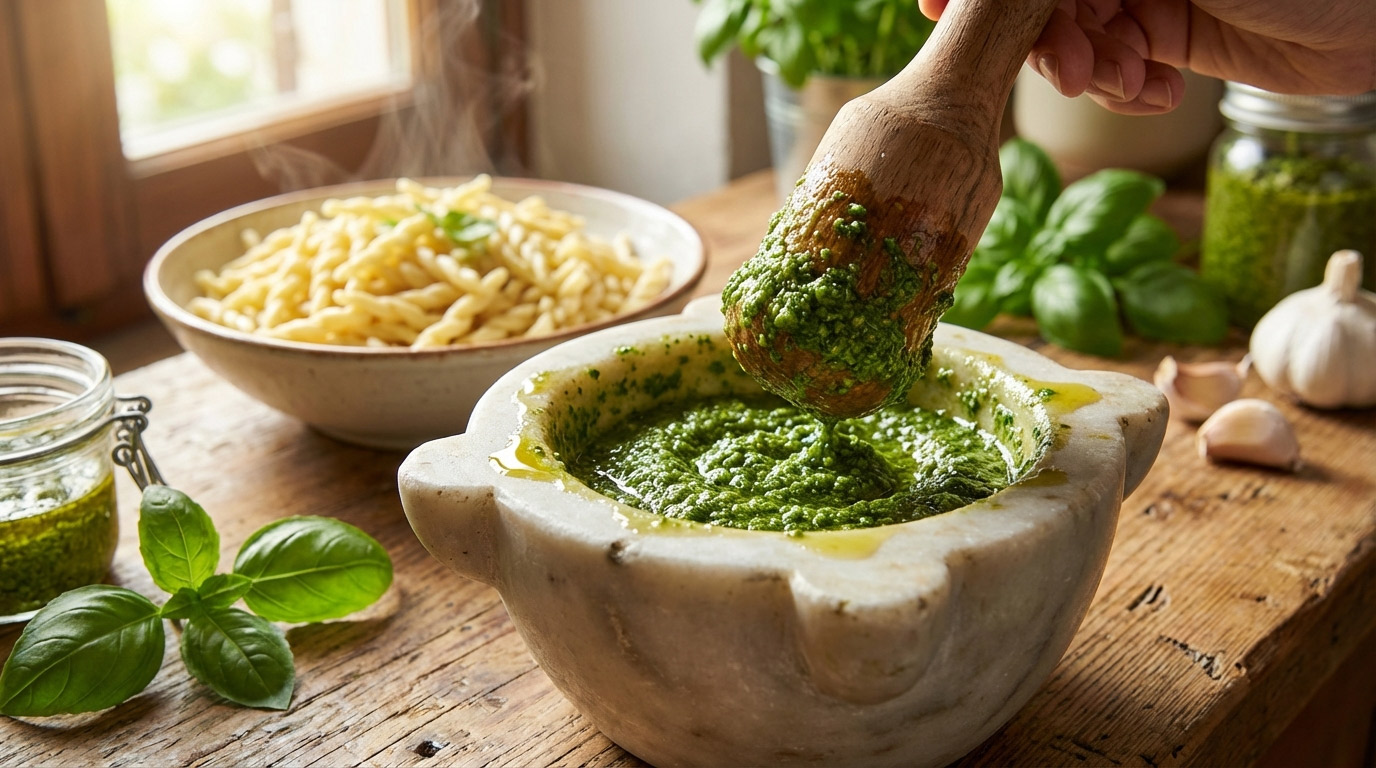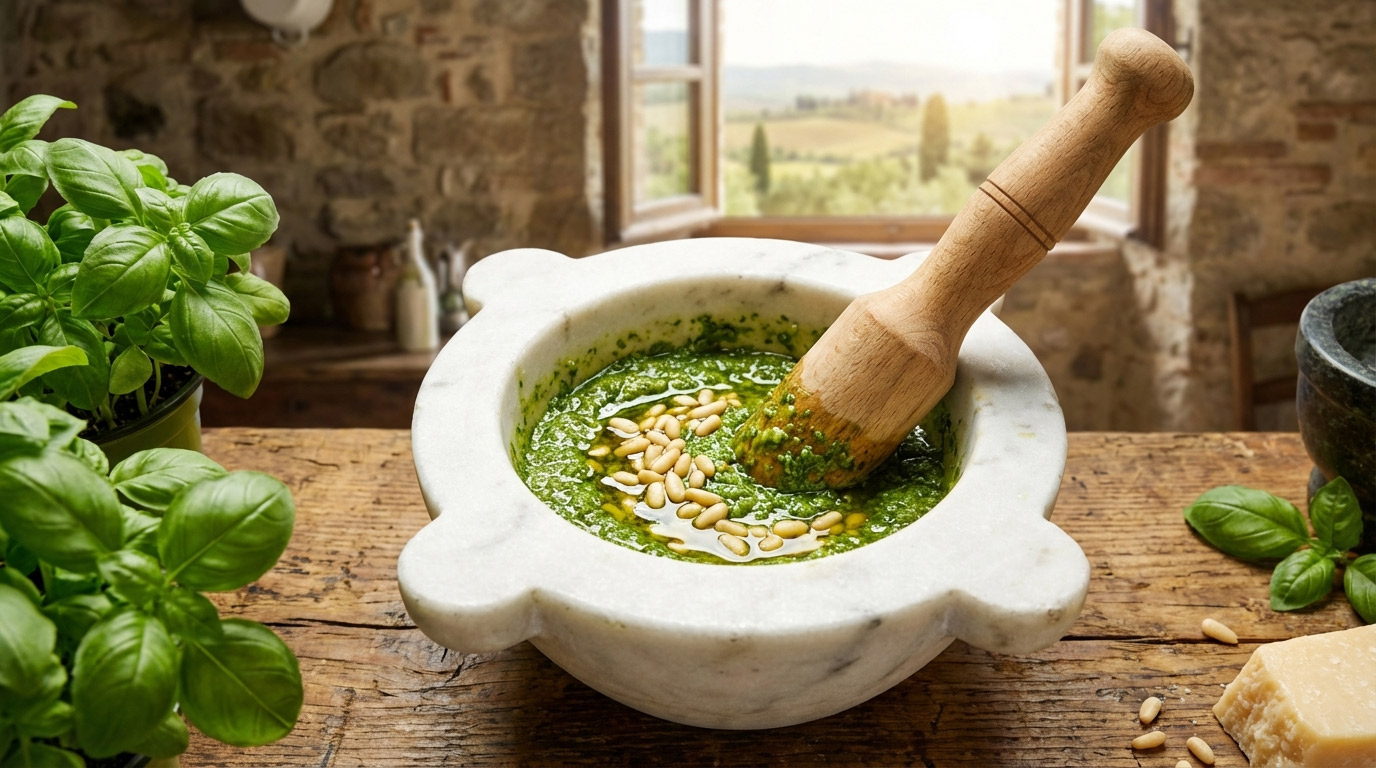















- Измельчение песто
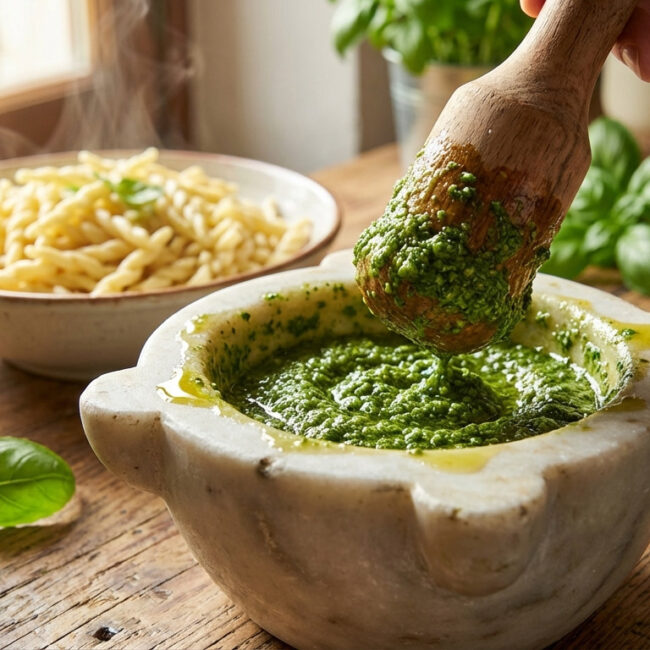
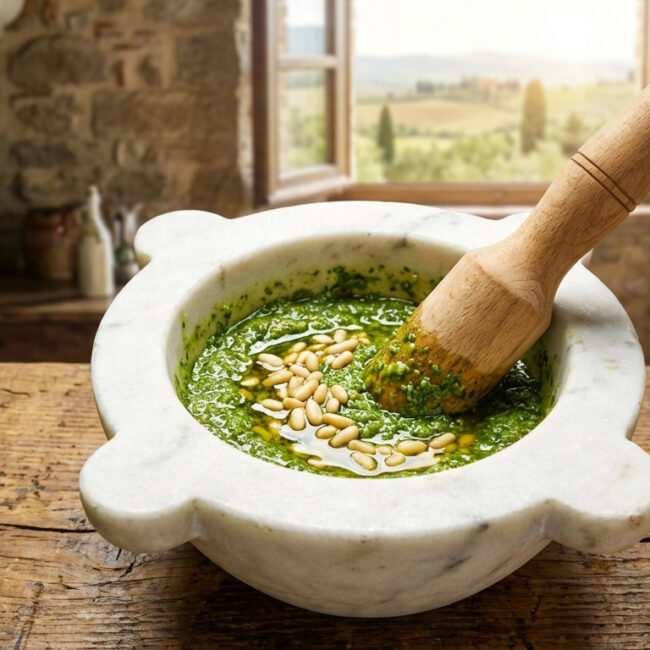
Если используете ступку и пестик, начните с измельчения чеснока и морской соли в пасту. Добавьте обжаренные кедровые орехи и измельчите их. Постепенно добавляйте листья базилика круговыми движениями, пока они не измельчатся. Наконец, вмешайте тертый сыр и оливковое масло. Если используете кухонный комбайн, кратковременно включите его на короткое время, чтобы текстура оставалась слегка крупнозернистой и предотвратить потемнение базилика от нагрева лезвий.
- Приготовление пасты
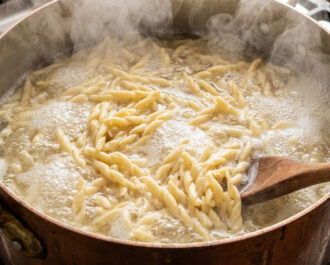
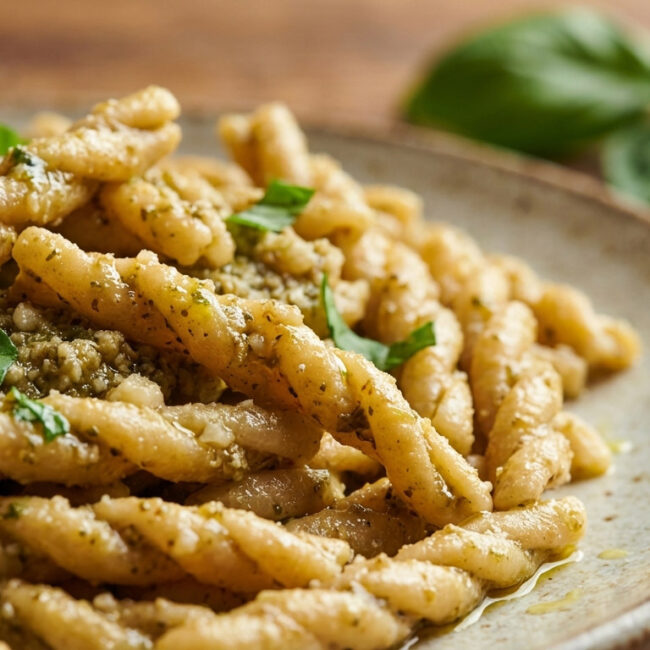
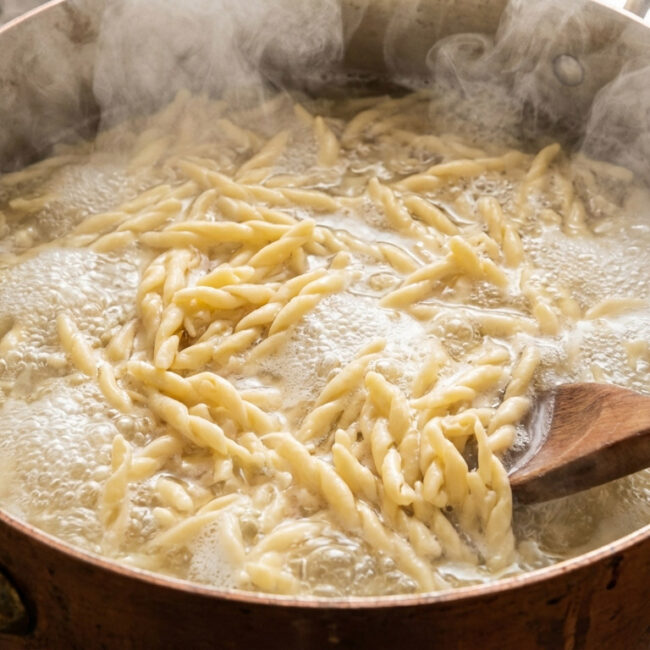
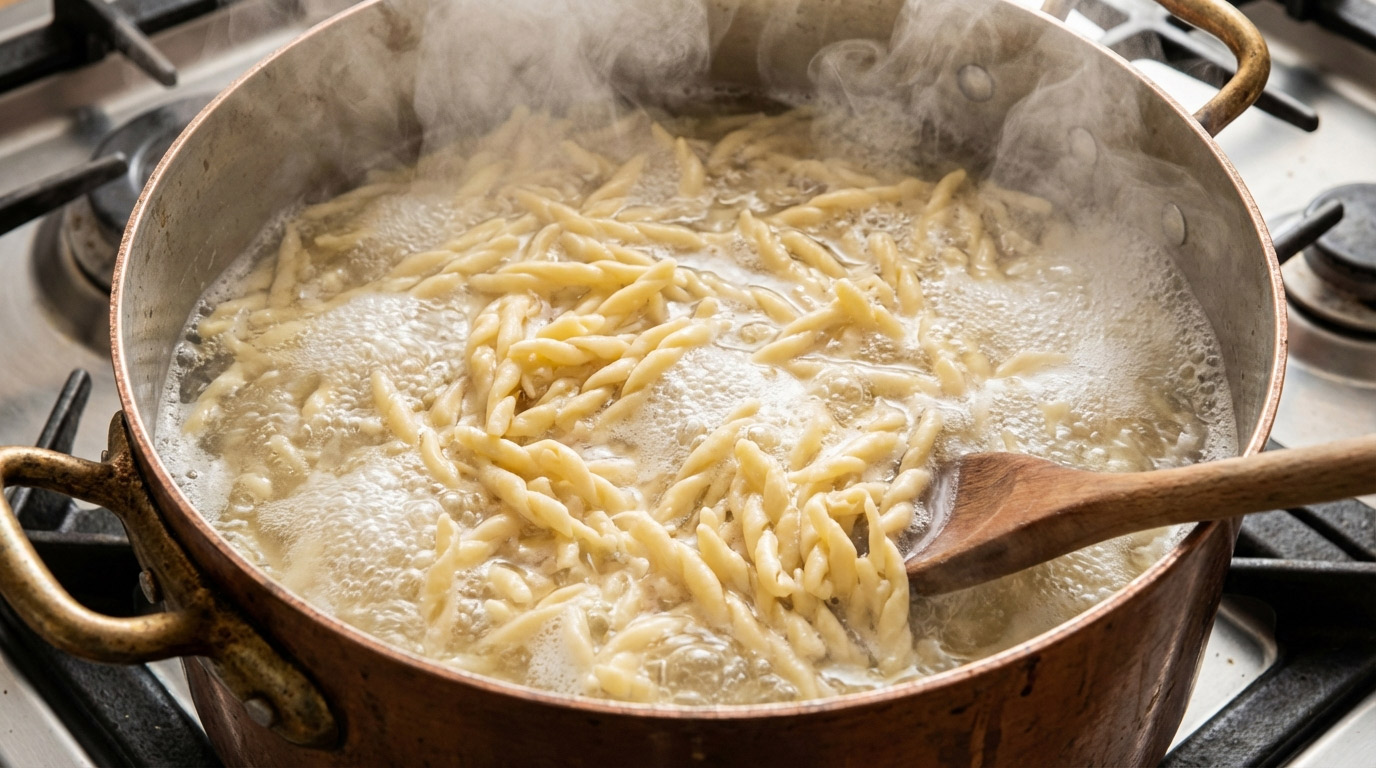
Отварите пасту "Трофи" в большой кастрюле с большим количеством подсоленной воды до состояния «аль денте». «Трофи» — плотная паста, поэтому ей нужно немного больше времени, чем спагетти. Перед тем как слить воду, отложите небольшую чашку воды, в которой варилась паста. Эта вода — «секретный ингредиент», который поможет маслянистому песто эмульгироваться и идеально прилипнуть к пасте.
- Холодный бросок
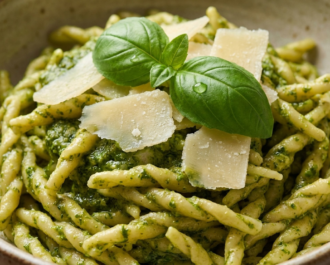
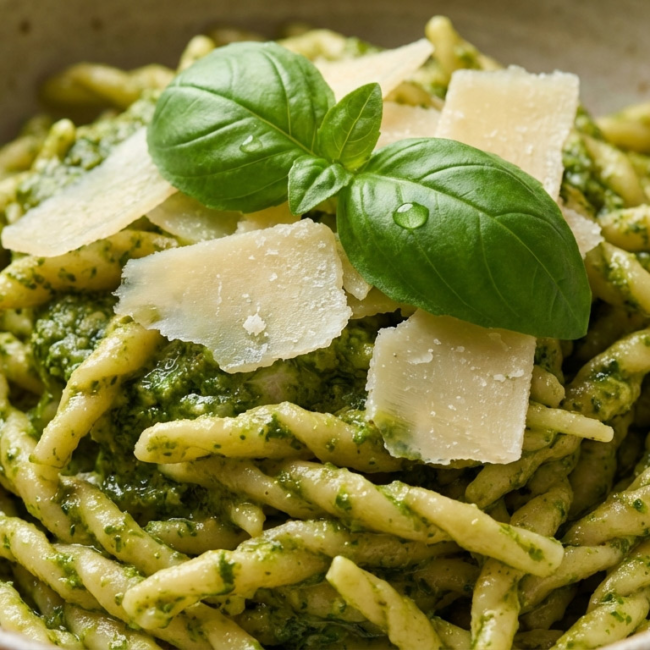
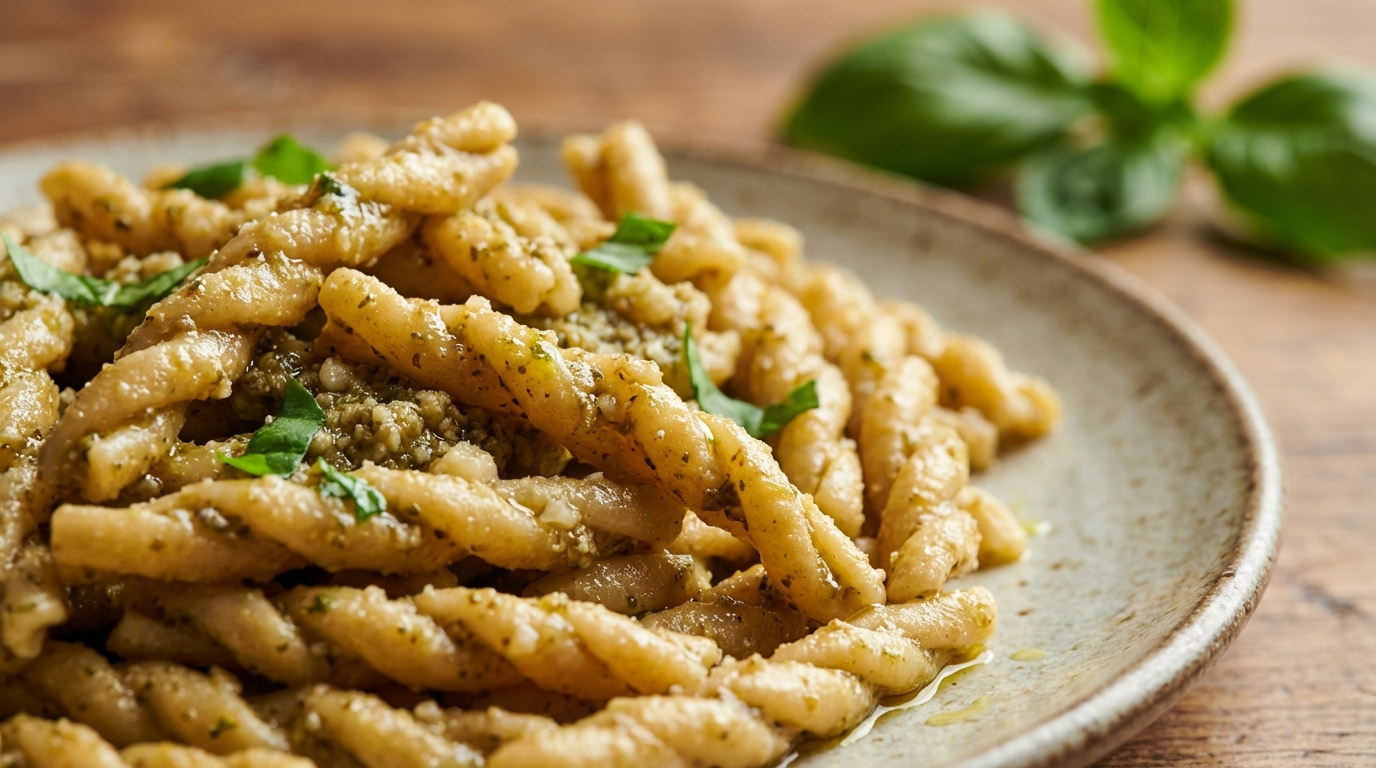
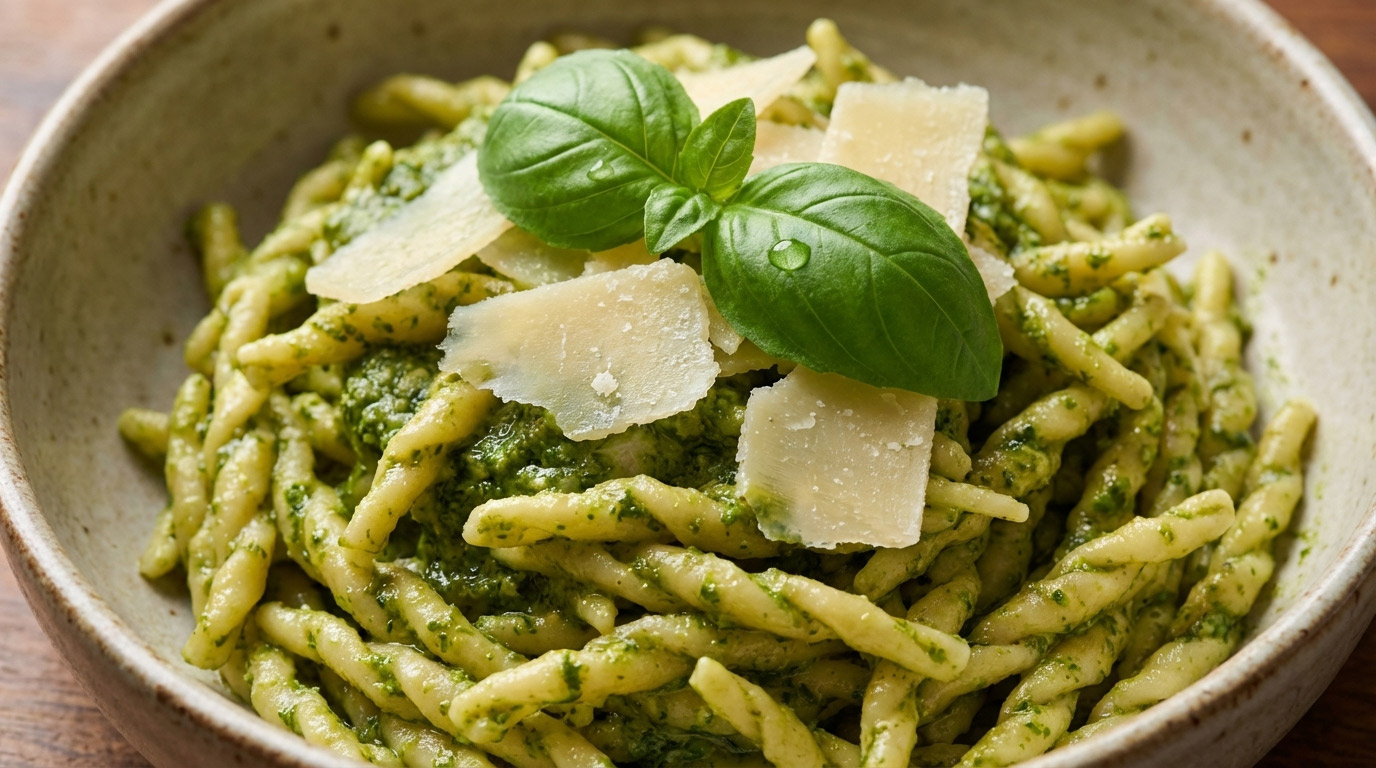
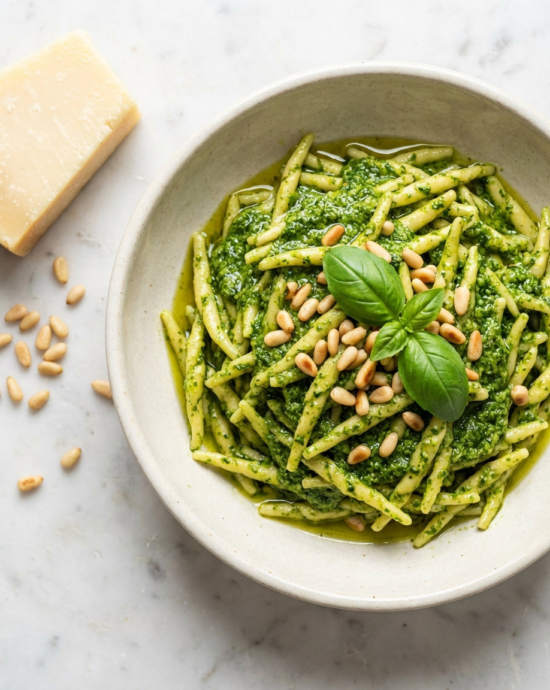
Выложите отваренную пасту в большую миску. Добавьте песто и несколько столовых ложек оставшейся воды от варки пасты. Энергично перемешайте, пока паста полностью не покроется сливочным зеленым соусом. Никогда не нагревайте песто на сковороде, так как сильный огонь уничтожит нежный аромат свежего базилика. Подавайте с дополнительным пармезаном и небольшим количеством оливкового масла.
- Калории:580 ккал%29%
- Белок:14 g%28%
- Углеводы:65 g%25%
- Сахар:2 g%2%
- Соль:1.2 g%20%
- Энергия:2425 кДж%29%
- Толстый:32 g%46%
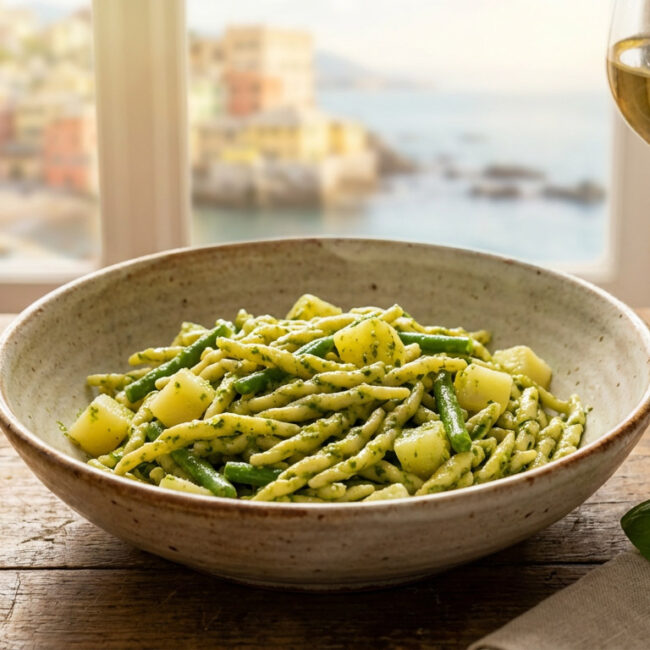
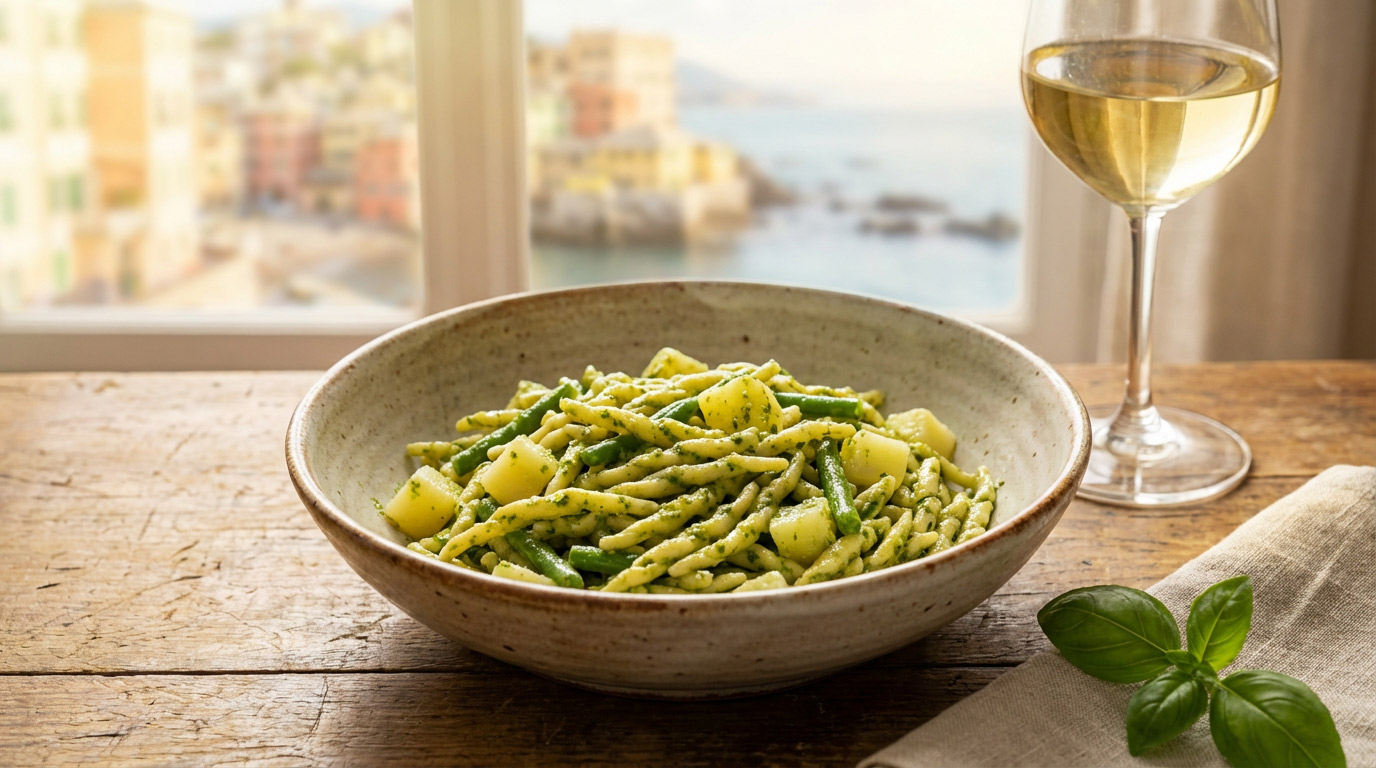
Pesto Genovese is the green jewel of Ligurian cuisine, specifically from the city of Genoa. The name comes from “pestâ,” meaning “to pound,” referring to the traditional method of using a marble mortar and wooden pestle. Unlike cooked sauces, Pesto is a “cruda” (raw) sauce, preserving the volatile oils and bright color of fresh basil. Culturally, it is paired with “Trofie,” a short, twisted pasta shape designed to catch the sauce in its spirals. This dish represents the Mediterranean summer, focusing on high-quality olive oil, fragrant basil, and aged Italian cheeses.