











Un viaggio attraverso le cucine del mondo: come geografia, cultura e storia hanno plasmato i cibi che amiamo oggi.
- 9 maggio 2026
- 9 Min Read
Food as the Universal Language of Humanity
Food is one of the most powerful expressions of culture. It tells stories of migration, trade, climate, religion, survival, and creativity. Every cuisine in the world is a living archive of human history, shaped by geography, climate, agriculture, and centuries of cultural exchange. When we explore world cuisines, we are not simply tasting dishes we are experiencing the evolution of civilizations. From the spice‑rich kitchens of India to the minimalist elegance of Japanese cooking, from the hearty traditions of Europe to the vibrant flavors of Latin America, each cuisine carries the identity of its people. This article takes you on a deep journey through global food traditions, examining how history, environment, and culture shaped the dishes we know today.
The Foundations of Global Cuisine: Geography as the First Chef
Long before trade routes and cultural exchange existed, geography determined what people could eat. The natural environment dictated which crops could grow, which animals could be raised, and which cooking methods were possible. Coastal regions developed seafood‑based cuisines, while mountainous areas relied on preserved foods and hardy grains. Tropical climates produced fruits, spices, and herbs that became central to their culinary identity, while colder climates depended on root vegetables, dairy, and long‑lasting ingredients.
In Japan, the surrounding seas shaped a cuisine built on fish, seaweed, rice, and fermentation. In contrast, the Middle East, with its arid climate, developed dishes centered around wheat, legumes, lamb, and spices that could withstand heat. Northern Europe, with its cold winters, relied heavily on potatoes, cabbage, preserved meats, and dairy. Geography was the first and most influential force in shaping global cuisine, and its impact is still visible today.
The Role of Ancient Civilizations in Culinary Development
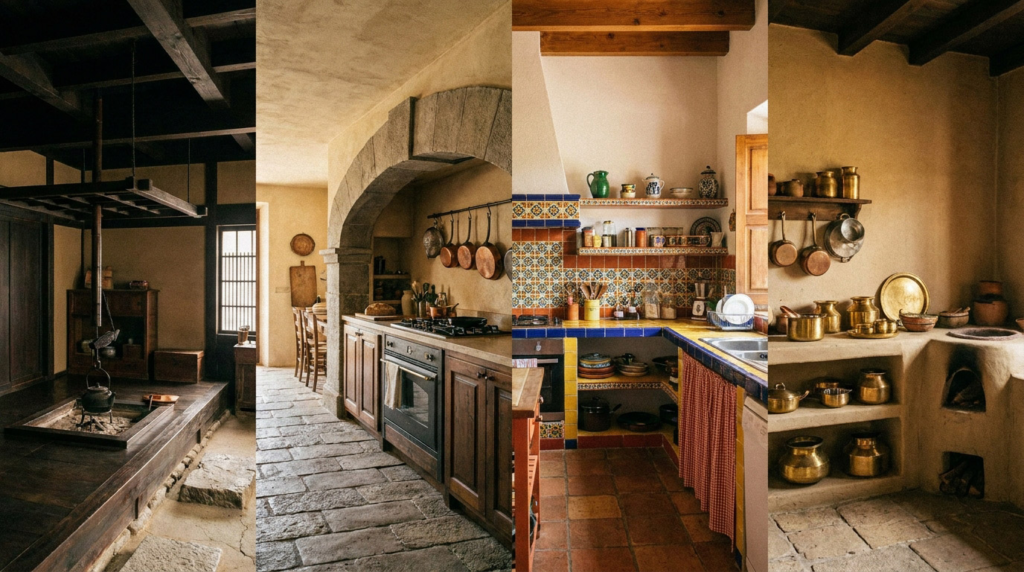
As early civilizations emerged, food became a symbol of power, religion, and social structure. In ancient Egypt, bread and beer were daily staples, while spices and herbs were used for both cooking and medicine. The Nile River provided fertile land for wheat, barley, and vegetables, creating one of the earliest structured cuisines in history.
In Mesopotamia, clay tablets reveal recipes that included garlic, onions, mustard, and herbs some of the earliest recorded dishes in human history. Meanwhile, ancient China developed a sophisticated culinary philosophy based on balance, harmony, and the medicinal properties of food. The concept of yin and yang influenced cooking techniques, ingredient combinations, and even meal timing.
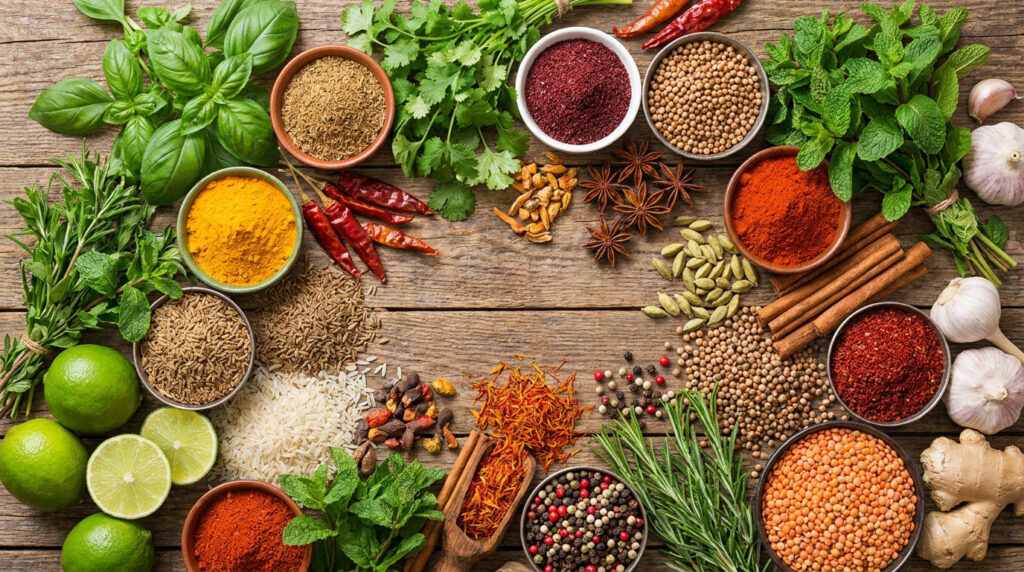
India’s ancient Ayurvedic system shaped a cuisine deeply connected to health, digestion, and spiritual well‑being. Spices such as turmeric, cumin, coriander, and cardamom were not only flavor enhancers but also essential medicinal tools. These early civilizations laid the foundation for culinary traditions that continue to influence global cuisine today.
The Birth of Trade Routes: How Food Traveled Across Continents
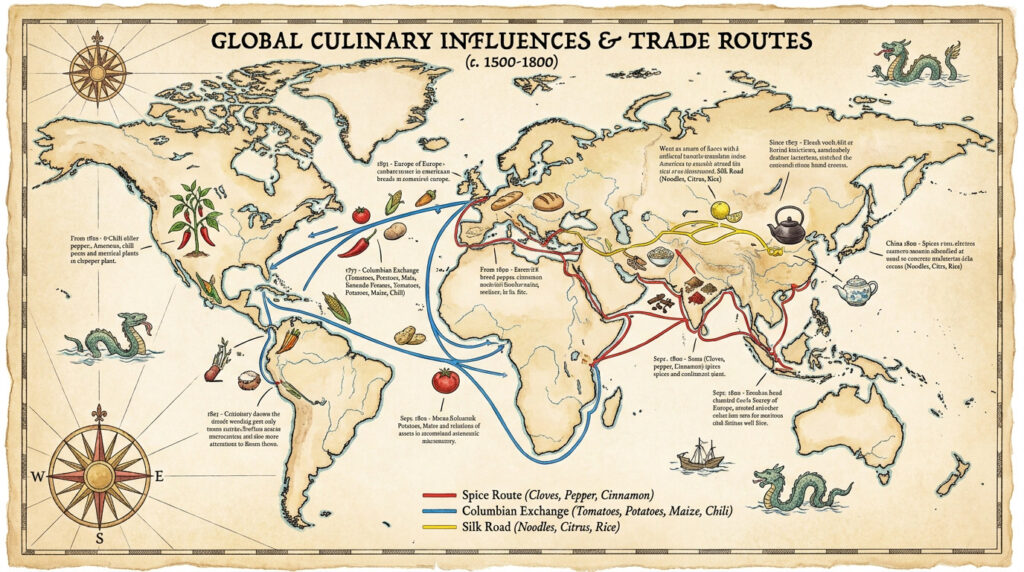
As civilizations grew, so did their desire for new flavors. This hunger for exotic ingredients led to the creation of vast trade networks that connected distant parts of the world. The Silk Road, stretching from China to the Mediterranean, carried spices, tea, rice, citrus fruits, and countless other ingredients across continents. These exchanges transformed local cuisines forever.
When black pepper from India reached Europe, it became so valuable that it was used as currency. Cinnamon from Sri Lanka, nutmeg from Indonesia, and saffron from Persia became symbols of wealth and luxury. The movement of food along these routes was not just economic it was cultural. Recipes, cooking techniques, and culinary philosophies traveled with merchants, shaping the evolution of global cuisine.
The maritime spice routes expanded this exchange even further. Arab traders brought spices to Africa, Europe, and Asia, influencing everything from Moroccan tagines to Italian pasta sauces. Without these ancient trade networks, the world’s cuisines would look entirely different today.
The Age of Exploration: A Culinary Turning Point
The European Age of Exploration was driven largely by the desire to control the spice trade. When explorers like Columbus, Vasco da Gama, and Magellan set out to find new routes to Asia, they unknowingly triggered one of the most significant culinary transformations in history. Their voyages led to the Columbian Exchange the massive transfer of foods, animals, and crops between the Old World and the New World.
This exchange introduced Europe, Africa, and Asia to ingredients such as tomatoes, potatoes, corn, chili peppers, cacao, and vanilla. In return, the Americas received wheat, rice, sugarcane, livestock, and various spices. The impact was immediate and profound. Italian cuisine embraced tomatoes so deeply that it is now impossible to imagine pasta without tomato sauce. Indian and Thai cuisines adopted chili peppers, which became central to their identity. Potatoes transformed Irish, Russian, and German cooking. Chocolate, once a sacred drink of the Aztecs, became a global obsession.
The Age of Exploration reshaped the world’s cuisines in ways that still define them today.
European Cuisines: Tradition, Technique, and Regional Identity
Europe’s culinary landscape is incredibly diverse, shaped by climate, agriculture, and centuries of cultural exchange. Italian cuisine is celebrated for its simplicity, relying on fresh ingredients like tomatoes, olive oil, basil, and cheese. Each region has its own specialties risotto in the north, pizza in Naples, seafood in Sicily. French cuisine, often considered the foundation of Western culinary arts, emphasizes technique, sauces, and regional terroir. From buttery pastries to rich stews, French cooking has influenced chefs around the world.
Spain’s cuisine reflects its Mediterranean climate and Moorish history, blending seafood, olive oil, saffron, and paprika into dishes like paella and tapas. Greece, one of the oldest culinary cultures in Europe, offers a diet rich in olive oil, vegetables, yogurt, and grilled meats a foundation of the modern Mediterranean diet.
Northern Europe, with its colder climate, developed hearty dishes centered around potatoes, cabbage, smoked fish, and preserved meats. Scandinavian cuisine, once considered simple, has evolved into a global trend through the New Nordic movement, which emphasizes local, seasonal ingredients and innovative techniques.
Asian Cuisines: Balance, Flavor, and Ancient Wisdom
Asia is home to some of the world’s most complex and diverse culinary traditions. Chinese cuisine, with its regional variations, offers everything from the bold flavors of Sichuan to the delicate dishes of Cantonese cooking. The philosophy of balance sweet, sour, salty, bitter, and umami guides every meal.
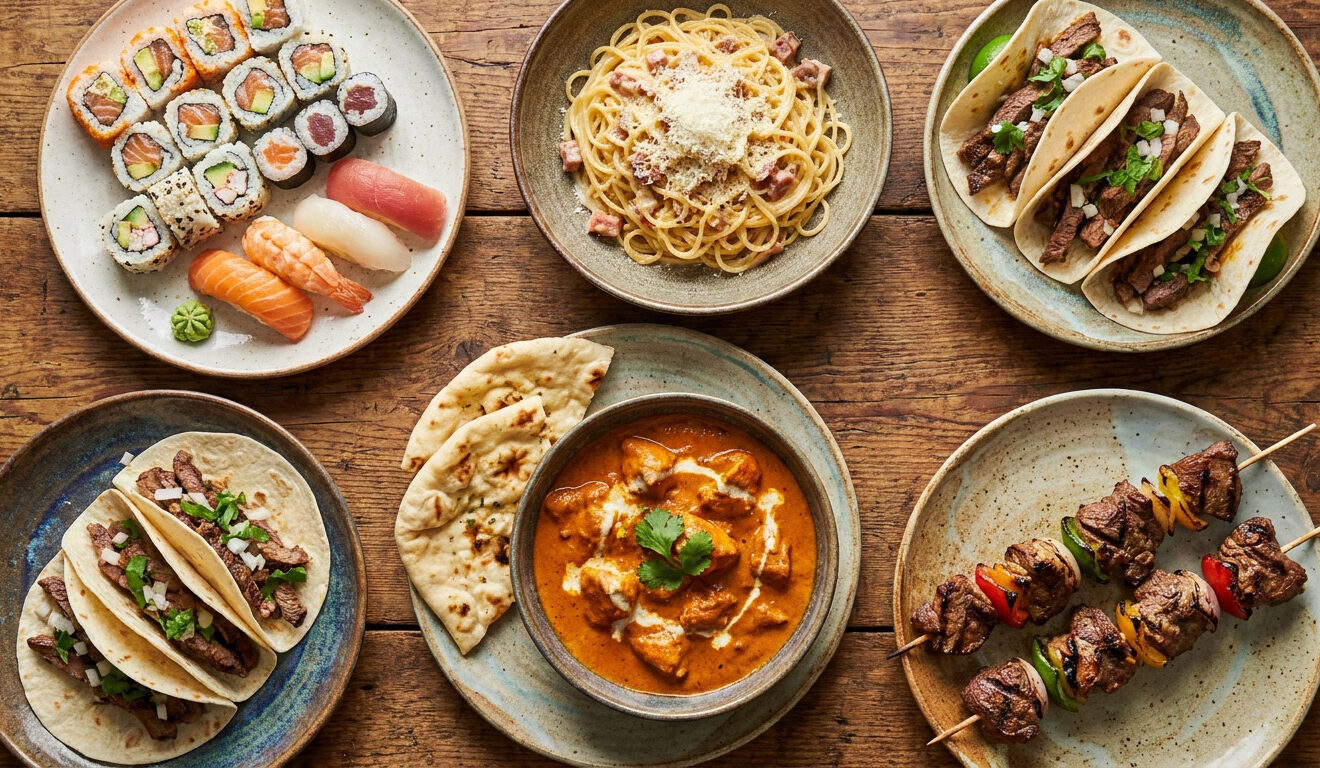
Japanese cuisine is defined by precision, purity, and respect for ingredients. Sushi, ramen, tempura, and miso soup reflect centuries of culinary refinement. The Japanese approach to food emphasizes seasonality, presentation, and harmony.
Indian cuisine is a celebration of spices, regional diversity, and ancient Ayurvedic principles. Northern India offers creamy curries and tandoori dishes, while southern India features coconut‑based stews, rice dishes, and fermented foods like dosa and idli. The complexity of Indian spice blends is unmatched, creating layers of flavor that define the cuisine.
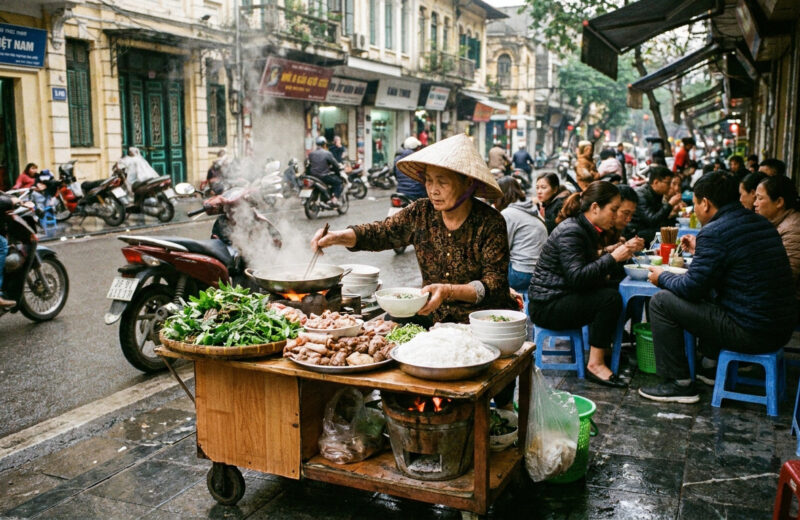
Southeast Asia brings together sweet, sour, spicy, and salty elements in vibrant dishes like Thai curries, Vietnamese pho, and Indonesian satay. Fresh herbs, citrus, and chili peppers are essential components of these cuisines.
Middle Eastern Cuisines: The Crossroads of Flavor
The Middle East is one of the oldest culinary regions in the world, shaped by ancient civilizations, trade routes, and nomadic traditions. Its cuisine is rich in spices, grains, legumes, and grilled meats. Dishes like hummus, falafel, kebabs, and tabbouleh have become global favorites.
Turkey, located at the crossroads of Europe and Asia, blends Ottoman, Mediterranean, and Middle Eastern influences. Its cuisine features yogurt‑based dishes, grilled meats, stuffed vegetables, and pastries like baklava. Iran’s cuisine is known for its fragrant rice dishes, saffron, pomegranate, and slow‑cooked stews.
The Middle East’s culinary identity is deeply tied to hospitality, communal eating, and the sharing of food traditions that have endured for thousands of years.
African Cuisines: Diversity Rooted in Tradition
Africa’s culinary landscape is incredibly diverse, shaped by climate, agriculture, and cultural heritage. North African cuisine, influenced by Arab and Mediterranean traditions, features couscous, tagines, spices, and dried fruits. Moroccan cuisine is especially famous for its complex spice blends and slow‑cooked dishes.
West African cuisine is bold and hearty, with dishes like jollof rice, peanut stews, and grilled meats. Ingredients such as cassava, plantains, yams, and chili peppers are central to the region’s identity. East African cuisine blends African, Indian, and Arab influences, resulting in dishes like injera, lentil stews, and spiced meats.
Southern Africa offers a mix of indigenous traditions and European influences, with dishes centered around maize, grilled meats, and stews.
Latin American Cuisines: A Fusion of Ancient and Colonial Influences
Latin American cuisine is a vibrant blend of indigenous, European, African, and Asian influences. Mexico’s cuisine is built on ancient ingredients like corn, beans, chili peppers, and cacao. Tacos, mole, tamales, and salsas reflect centuries of culinary evolution.
Central and South America offer diverse dishes shaped by geography and culture. Peru’s cuisine, considered one of the most innovative in the world, combines indigenous ingredients with Japanese and Spanish influences. Brazil’s cuisine blends African, Portuguese, and indigenous traditions, resulting in dishes like feijoada and moqueca.
Argentina and Uruguay are famous for their grilled meats, reflecting the region’s cattle‑raising heritage. Caribbean cuisine is a colorful fusion of African, indigenous, and European flavors, with dishes featuring tropical fruits, seafood, and spices.
The Modern Global Kitchen: Fusion, Innovation, and Cultural Exchange
Today’s culinary world is more interconnected than ever. Globalization, migration, and technology have created a new era of fusion cuisine, where chefs combine ingredients and techniques from different cultures to create innovative dishes. Korean tacos, sushi burritos, and Indian‑inspired pizzas are just a few examples of how global flavors blend in modern kitchens.
Social media has also transformed the way people discover and share food. Recipes travel instantly across borders, inspiring home cooks and professional chefs alike. Despite this global exchange, traditional cuisines remain deeply valued, as people seek authenticity, heritage, and cultural identity through food.
Conclusion: World Cuisines Are the Story of Humanity
Exploring world cuisines is more than a culinary journey it is a journey through history, geography, culture, and human connection. Every dish carries the memory of ancient civilizations, trade routes, migrations, and traditions passed down through generations. Food is the universal language that unites people across borders, reminding us that despite our differences, we all share the same fundamental need for nourishment, comfort, and community.
Understanding global cuisines deepens our appreciation for the world and enriches our own cooking experiences. Whether you are tasting sushi in Japan, pasta in Italy, curry in India, or tacos in Mexico, you are participating in a story thousands of years in the making.